
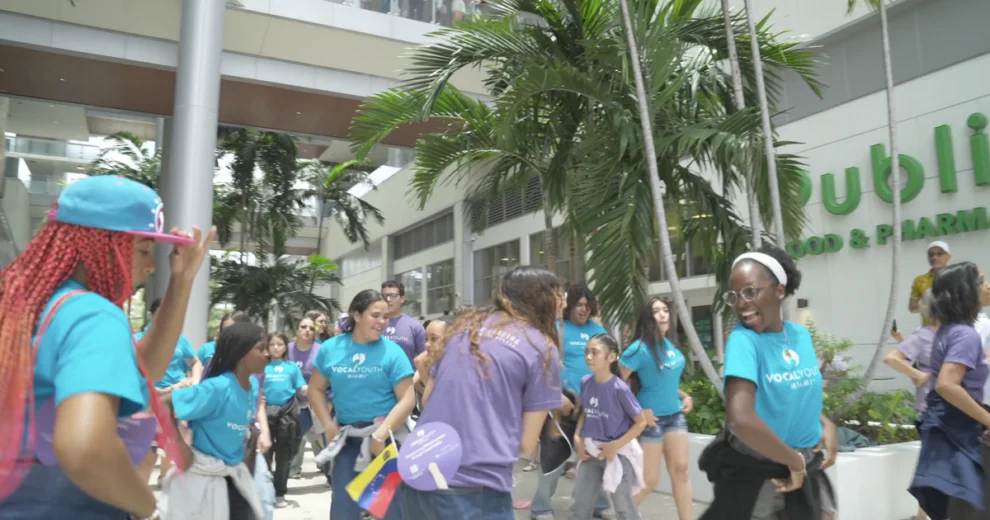
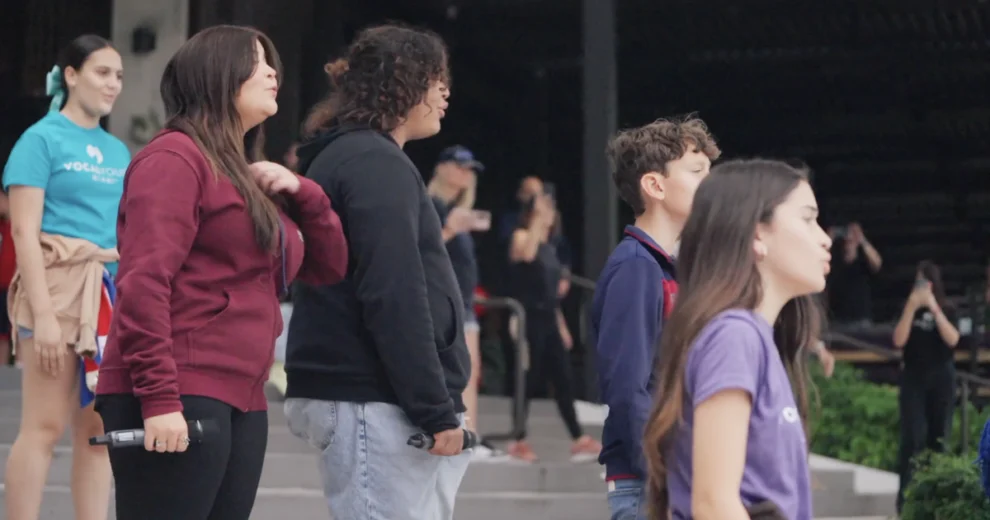
A few weeks ago, an ordinary Saturday afternoon at River Landing Shops in Miami took an unexpected turn when a group of young singers stepped off a boat docked along the riverwalk, climbed the stairs, and began singing as they entered the atrium. Voices started joining in from around the waterfront destination, and within a couple of minutes, 100 kids were singing together in the center of the lifestyle shopping center. Shoppers set down their bags, and people who had never met danced next to one another.
Vocal Youth Miami, a nonprofit community-based organization, organized the performance and teaches children across Miami-Dade County to sing and perform. This organization teaches our youth how to be part of something bigger than themselves, and in a time when so much of childhood happens alone on a screen, that is no small thing. The children in that atrium came from the northern and southern ends of the county, from households with two working parents, from families with strong support systems, and from families barely making ends meet. But on that day, none of it mattered. They came together through music, and their voices carried through the entire building.
Programs like this can depend in part on public dollars, and much of that funding comes from Miami-Dade County through the property taxes it collects. This November, Floridians will vote on a proposed constitutional amendment that would change how those taxes work, lowering property taxes for homeowners, capping future increases on businesses and other properties, and limiting how local governments can spend property tax revenue. Before heading to the ballot box, it's worth understanding what collecting fewer property tax dollars could actually mean for the county's budget.
The county budget is roughly $13 billion, but much of it belongs to the airport, the seaport, water and sewer, and garbage collection. Each of those is a separate enterprise, and by law, the revenue each one generates cannot be spent on anything else. Airport dollars stay at the airport. Water dollars stay in the water system. Everything else the county does for the public, from police and fire to roads, parks, transit, and support for CBOs, is paid for out of the general fund, and the general fund runs largely on property taxes.
Consider what that one fund quietly makes possible. A large share of Metrorail riders are subsidized, and the Metromover downtown costs nothing to ride. The fare a rider pays covers only a small fraction of operating costs, and the difference comes out of the general fund. Our community made that choice a long time ago, because moving people around this county, including the workers our whole economy depends on, is worth paying for.
Nonprofit, community-based organizations draw from that same fund. These are the groups that mentor children, feed the homeless, shelter survivors of abuse, and treat addiction across Miami-Dade. They have historically run on a mix of federal, state, and county grants, but federal and state support has been shrinking for years, leaving local governments to carry more and more of the load.
I am not going to tell you whether the amendment is good policy or bad policy, but the math is worth understanding. If the general fund shrinks, the money has to come from somewhere, through some combination of new fees and budget cuts. The park that used to be free could come with a parking charge. The $2 tennis court could become a $30 tennis court. The bus ride could cost more. And when it comes time to cut, government protects its basic functions first, which means programs considered discretionary could become particularly vulnerable. Organizations like Vocal Youth Miami could be among them.
Companies can help, and many are civic-minded. But private generosity has never been able to do the heavy lifting alone. Supporting the organizations that hold a community together has always required the community itself to act together through its county government.
It is important to be informed. Understand where your county's money comes from and where it goes. Learn what the proposal would actually change before you form an opinion about it, and then vote as an informed citizen.
And if you want a reason to care, I can give you 100 of them. On that Saturday afternoon, the 100 kids who stood in our atrium in the heart of Miami experienced what it feels like to be part of something bigger than themselves. When it becomes their turn to lead this community, I hope they carry that lesson with them. Investing in our kids is not a nice-to-have. It is how Miami stays Miami.
About the author: Andrew Hellinger is co-founder and principal of Urban-X, the Miami-based real estate development and management company behind River Landing Shops & Residences.
Subscribe to Calle Ocho News for weekly Miami-Dade updates, and contact Pressnet Corp. for advertising, sponsorship, and partnership opportunities.