
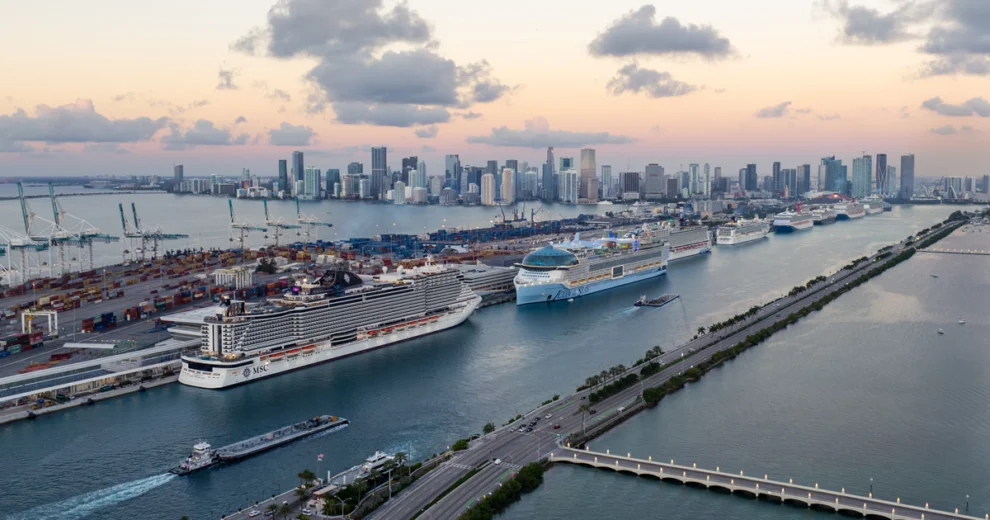
New routing instructions, traffic technology, law enforcement support and airport shuttle pilots aim to reduce congestion as PortMiami prepares for 81 high-volume cruise days
PortMiami is introducing a series of traffic management measures ahead of the 2026–2027 cruise season, when the seaport expects 81 days with seven to 10 ships calling on the same day. The initiatives are designed to help passengers reach the correct terminals, reduce vehicle congestion around the port and downtown Miami, and improve the flow of traffic for residents, visitors and businesses.
The measures combine passenger education, clearer directions for drivers, technology to monitor congestion, additional public safety personnel and shuttle services on select dates. PortMiami is also continuing coordination with cruise lines, transportation providers, government agencies and downtown stakeholders as it prepares for increased activity during the season.
For passengers, one of the most important changes is the emphasis on arriving at the time assigned by their cruise line and choosing the correct entrance based on their terminal. PortMiami is producing two informational videos, titled “Arrive at Your Embarkation Time” and “Choosing the Right Entrance,” for distribution through the seaport’s social media accounts and those of its partners and stakeholders.
The guidance is intended to address a practical source of congestion: vehicles arriving too early or entering through an access point that does not provide the most direct route to their ship. With multiple vessels operating on high-volume days, coordinating arrivals and directing vehicles to the appropriate entrance can help reduce unnecessary traffic around the port.
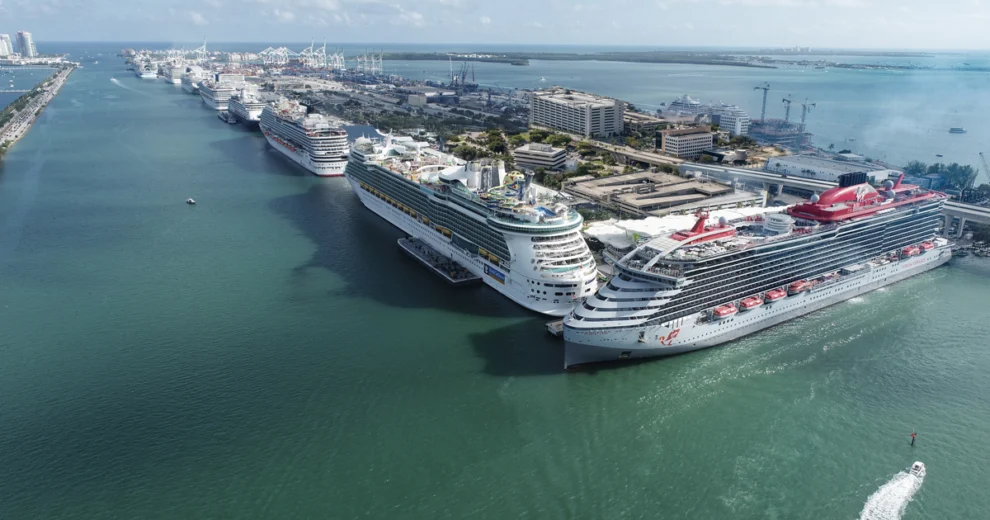
PortMiami Directs Passengers to the Appropriate Entrances and Expands Traffic Coordination
PortMiami’s routing instructions distinguish between terminals served by the tunnel and those accessed through the bridge. Passengers traveling to Cruise Terminals AA, A, B, C or D should enter through the PortMiami Tunnel. Those heading to Terminals E, F, G, J or V should use the PortMiami Bridge.
The instructions also identify separate access routes for transportation providers. Taxicabs serving the staging area across from Terminal C should enter through the tunnel and park in Lot 1. Taxis serving the staging area across from Terminal E should use the bridge and park in Lot 2. Rideshare companies and passenger motor carriers accessing their staging areas should enter through the tunnel.
PortMiami plans to share these directions with cruise lines, taxicab operators, rideshare companies, passenger motor carriers and other partners. The effort is intended to make route information available before passengers begin their trips, rather than leaving drivers to determine the correct access point after reaching the port area.
Technology is another part of the traffic plan. The seaport will continue working with GridMatrix, the winner of a Miami-Dade Innovation Authority Public Innovation Challenge pilot project. The company’s AI-powered computer vision technology will track traffic congestion and help PortMiami anticipate bottlenecks. The resulting information is expected to support data-driven decisions about how and where traffic measures should be implemented.
Public safety and law enforcement personnel will also be deployed on select dates to assist with traffic management at Biscayne Boulevard and in surrounding areas of downtown Miami. The participating agencies include PortMiami, the Miami-Dade Sheriff’s Office and the City of Miami Police Department. The deployment recognizes that cruise-related traffic can affect streets beyond the port entrance, making coordination across downtown an important part of the response.
Miami-Dade County Mayor Daniella Levine Cava said the initiatives reflect the county’s commitment to smarter mobility and the use of innovation to keep people and goods moving safely. She also credited PortMiami Director Jonathan Daniels, Deputy Mayor Roy Coley and Chief of Public Safety Arnold Palmer with helping advance the effort during Daniels’ first eight weeks in the position.
District 8 Commissioner Danielle Cohen Higgins, who chairs the county’s Aviation and Seaport Committee, said the changes reflect the importance of listening to residents living near the seaport, transportation partners and county and municipal leaders. She described PortMiami’s efficient operation as important to residents, visitors and businesses throughout the area.
Airport Shuttles and Regional Partnerships are Part of the Congestion Strategy
The port’s plans also include transportation options intended to reduce the number of individual vehicles traveling between the airport and cruise terminals. In partnership with Carnival Cruise Line, PortMiami began a pilot program in October 2026 offering complimentary airport shuttle transfers to Miami International Airport for Carnival Celebration passengers on select dates.
The seaport will also continue Royal Caribbean Group’s complimentary airport shuttle program for passengers sailing on Icon of the Seas on select dates. These programs provide an alternative to separate passenger drop-offs and pickups, although their availability is limited to designated dates and eligible passengers.
PortMiami is also continuing to use cargo roadways as alternative traffic management routes when needed. The approach is intended to help ease congestion in downtown Miami and on surrounding highways, including Interstate 395. The port will maintain communication with the Florida Department of Transportation, the City of Miami, Kaseya Center and other downtown stakeholders as traffic conditions and operational needs change.
The scale of the cruise schedule helps explain the need for coordination. The 2026–2027 season includes a range of vessels scheduled to call at PortMiami, from Explora Journeys’ Explora III and Scenic Eclipse in October 2026 to Silversea, The Ritz-Carlton Yacht Collection and Emerald Cruises vessels in November and December. Additional scheduled calls include Margaritaville at Sea’s Beachcomber in January 2027, Carnival Firenze in February, Norwegian Aura in June and Royal Caribbean’s Hero of the Seas in August.
PortMiami said the initiatives resulted from collaboration with federal, state, county and municipal agencies, cruise lines, transportation companies and neighborhood representatives. Partners include the U.S. Coast Guard, U.S. Customs and Border Protection, the Florida Department of Transportation, Miami-Dade Fire Rescue, the City of Miami and the City of Miami Beach, as well as major cruise operators and the Greater Miami and the Beaches Hotel Association.
PortMiami Director and CEO Jonathan Daniels said the measures are intended to reduce congestion, enhance safety and improve the passenger experience from curb to cruise. The port, recognized as the Cruise Capital of the World, welcomed its 10 millionth cruise passenger on Sept. 14, 2026. It is also one of Miami-Dade County’s major economic engines, with the source material reporting an annual contribution of $61 billion to the local economy and support for more than 340,000 jobs.
For cruise passengers, the immediate takeaway is straightforward: check the assigned embarkation time, confirm the terminal and follow the entrance directions before leaving for the port. For downtown residents and commuters, the effectiveness of the measures will depend on how well the agencies and transportation partners coordinate during the busiest days. As the season progresses, clear communication and careful traffic management will be essential to balancing the movement of cruise passengers with the daily needs of the surrounding community.
Subscribe to Calle Ocho News for weekly Miami-Dade updates.
Contact Pressnet Corp. for advertising, sponsorship and partnership opportunities.