
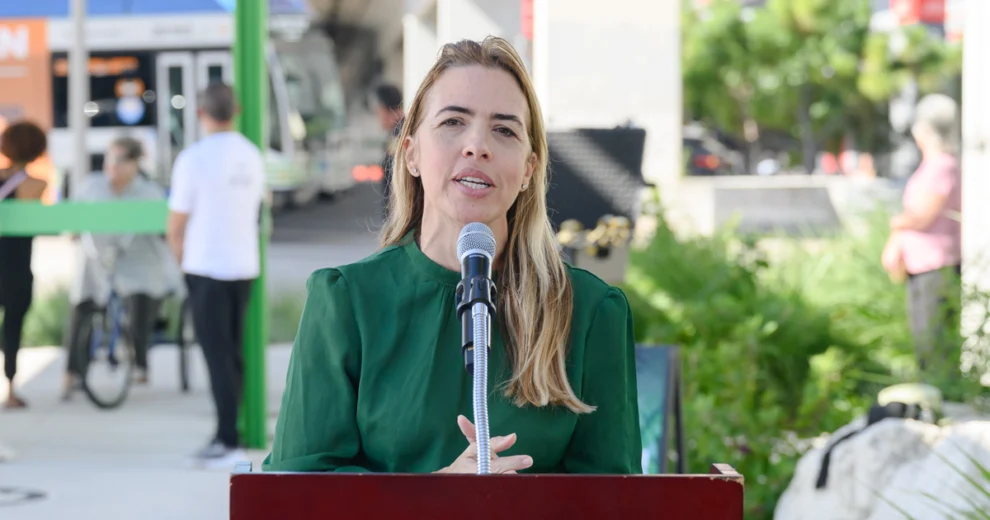
As National Disability Employment Awareness Month brings attention to workplace inclusion, Miami-Dade County Commissioner Raquel Regalado discusses the barriers facing people with disabilities, the resources available to employers and why meaningful employment requires more than simply getting hired
October's National Disability Employment Awareness Month is drawing attention to a challenge that extends beyond hiring practices: ensuring that people with disabilities have access to meaningful employment, transportation, professional development and opportunities to live independently. In Miami-Dade County, Commissioner Raquel Regalado says progress depends on connecting employers, families and individuals with resources that already exist but are not always widely understood or accessible.
During a Calle Ocho News Conversations interview, Regalado discussed efforts to expand employment opportunities for neurodivergent individuals and others with disabilities, while addressing misconceptions that can prevent employers from recognizing their abilities. Her message centered on a broader understanding of inclusion, one that recognizes employment as part of personal development, economic participation and long-term independence.
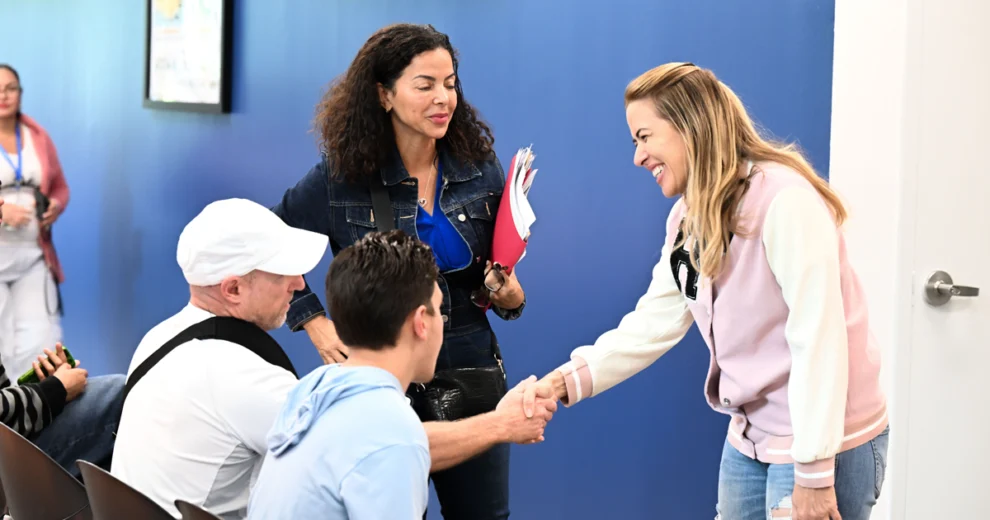
Breaking Employment Barriers and Helping Businesses Recognize Talent
Regalado believes Miami-Dade has made progress by addressing obstacles that can prevent individuals with disabilities from entering the workforce, particularly transportation access and interactions with law enforcement. She pointed to county efforts to train transit personnel and improve how public services respond to residents with disabilities, emphasizing that employment opportunities have limited value when workers cannot reliably reach their jobs.
Another priority is helping families identify businesses that already employ people with disabilities. Regalado described an initiative to highlight inclusive employers and develop a map that would allow residents to support those businesses through their purchasing decisions. She cited Pinecrest Bakery and Goodwill as examples of employers providing opportunities, explaining that greater public awareness can encourage additional businesses to participate.
The approach also offers families a way to envision employment as a realistic future for children with developmental disabilities. Rather than treating a diagnosis as a limitation on adulthood, Regalado encouraged parents to recognize that abilities, interests and levels of independence can continue developing throughout a person's life.
For employers, uncertainty about workplace accommodations remains a significant obstacle. Regalado said many businesses are interested in inclusive hiring but are unfamiliar with the support available or concerned about meeting legal requirements. She emphasized that accommodations can be less complicated than employers anticipate, particularly when organizations receive appropriate training and guidance.
Working with Chambers South, Regalado described efforts to train businesses to better serve neurodivergent customers as an initial step toward building confidence and understanding. The next phase, she explained, involves helping employers explore inclusive hiring and connect with organizations that provide workforce preparation and employment support.
Florida's vocational rehabilitation system can help eligible individuals prepare for employment and connect with employers. Regalado also discussed financial assistance and support arrangements that may be available through vocational rehabilitation providers and partner organizations. The specific assistance depends on the program and individual circumstances, making direct consultation with the appropriate agency important for businesses interested in participating.
Organizations such as Best Buddies and Goodwill can play a role in facilitating employment opportunities. Regalado also highlighted programs associated with the University of Miami's Center for Autism and Related Disabilities and Mailman Center for Child Development that help individuals develop employment skills, understand workplace expectations and advocate for accommodations.
Importantly, she challenged the assumption that a person with a disability should remain permanently in their first position or that an unsuccessful job placement represents an inability to work.
“Everybody has turnover,” Regalado said, arguing that employees with disabilities should have the same opportunity as other workers to explore different positions, develop their strengths and change careers.
Her comments underscore a distinction often overlooked in discussions about inclusive employment: successful workforce participation is not measured solely by the number of people hired, but also by whether individuals have opportunities to advance, change jobs and build satisfying careers.
Independence, Transportation and Family Support Shape Long-term Success
Employment cannot be separated from the conditions that allow people to participate in everyday life. Reliable transportation, accessible housing, supportive services and opportunities to make independent decisions all influence whether someone can maintain a job and develop greater autonomy.
Regalado discussed these issues through her experiences as both a county commissioner and a parent. She described the time and effort involved in teaching her son to navigate public transportation, explaining that the process required repeated trips, supervision and gradual increases in responsibility. Today, she said, he chooses to use transit independently, an achievement that expanded his ability to participate in community life.
Her daughter's needs and abilities are different, illustrating why independence cannot be approached through a single standard. Regalado emphasized that individuals develop at different rates and may require different types of assistance. For some, independence may involve traveling to work alone; for others, it may begin with making household decisions, participating in activities or learning unfamiliar routines.
The commissioner also acknowledged the difficulty parents can experience when allowing their children to take risks or encounter setbacks. She encouraged families to introduce responsibilities early, discuss employment as a possibility and recognize that learning from mistakes is part of adulthood.
These considerations extend to housing. Regalado referenced Casa Familia, a Miami-Dade initiative focused on residential opportunities for adults with intellectual and developmental disabilities, as one example of efforts to address long-term living arrangements. However, she acknowledged that additional housing approaches are needed to accommodate different abilities, support requirements and family circumstances.
The conversation also broadened to the importance of ensuring that public programs reach residents who face practical barriers. Regalado described how food distribution efforts can overlook seniors who do not own vehicles, and how her office has worked with volunteers and community organizations to deliver assistance directly to residents.
She argued that effective public services should reflect what individuals actually need rather than assumptions about their circumstances. That principle, she suggested, applies equally to disability employment, transportation, housing and financial assistance.
Looking toward 2027, Regalado identified a larger question facing Miami-Dade: how local government should prioritize essential services while connecting residents with existing county, state and federal resources. She emphasized transportation, water, sewer, stormwater management and other everyday services as fundamental responsibilities that directly affect quality of life.
National Disability Employment Awareness Month offers an opportunity to examine whether progress in workplace inclusion is translating into lasting opportunities. For Miami-Dade, the challenge is not simply persuading more businesses to hire people with disabilities. It is developing a coordinated environment in which employers understand available resources, families can plan for adulthood and individuals have meaningful choices about their work and independence.
Regalado's perspective places responsibility across the community, from employers and service providers to policymakers and families. The measure of success will be whether inclusive hiring initiatives lead to sustainable employment, greater independence and broader participation in Miami-Dade's economic and civic life.
Subscribe to Calle Ocho News for weekly Miami-Dade updates.
Contact Pressnet Corp. for advertising, sponsorship and partnership opportunities.