
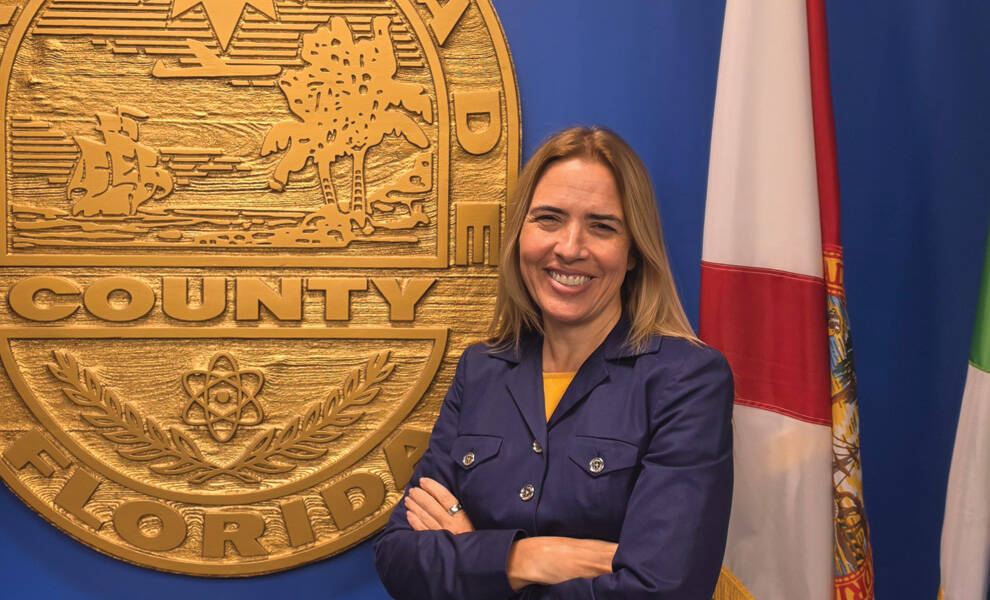
Commissioner Raquel Regalado is transforming personal advocacy into a statewide framework for autism awareness, accessibility, and the term neuroinclusion among neuro-inclusive communities across Florida
In Miami-Dade County, conversations surrounding autism and neurodiversity as well as neuroinclusion are expanding far beyond schools and healthcare systems. Increasingly, they are shaping public policy, community planning, transportation systems, public safety training, libraries, parks, and even airport experiences.
At the center of much of that progress is Miami-Dade County Commissioner Raquel Regalado, who’s recently launched the Florida Neuroinclusion Toolkit is helping position Miami-Dade as a leading example of what more inclusive communities can look like.
But the story behind the initiative is deeply personal.
For Regalado, neuroinclusion is not simply a policy issue, it is rooted in her own experience as the mother of neurodivergent children and in a years-long journey navigating systems that often were not designed with neurodiverse families in mind.
“I realized very quickly how many families felt excluded by systems that were never designed for them.”
— Raquel Regalado
That personal experience eventually evolved into public advocacy and, ultimately, into policy leadership aimed at reshaping how government institutions and community spaces serve residents with autism, ADHD, sensory sensitivities, dyslexia, and other neurological differences.
Turning personal experience into public policy
The Florida Neuroinclusion Toolkit, launched on World Autism Awareness Day, was designed as a practical resource for governments, businesses, schools, nonprofits, and organizations seeking to become more inclusive. Rather than offering abstract recommendations, the toolkit focuses on actionable strategies communities can realistically implement.
Among the ideas included are sensory-friendly programming, autism-aware staff training, social story templates, public space accessibility planning, and guidance for creating more inclusive experiences in parks, libraries, transportation hubs, and workplaces.
One of the central goals behind the initiative is to move the conversation beyond awareness and toward implementation.
“This is not a feel-good thing, you actually have to do it.” - Raquel Regalado
Over the past several years, Miami-Dade County has already implemented several neuro-inclusive initiatives that are now drawing national attention. Those efforts include sensory-friendly hours at community events, expanded first responder training, autism-inclusive public libraries and parks, and the MIAair program at Miami International Airport, which allows neurodivergent travelers and their families to rehearse the airport process before an actual flight.
The airport rehearsal program helps reduce anxiety by familiarizing participants with TSA screenings, boarding procedures, terminal navigation, and other parts of the travel experience that can often feel overwhelming for individuals with sensory sensitivities.
“It removes fear from the process,” Regalado explained. “When they return to travel for real, the experience feels more manageable because it is no longer completely unfamiliar.”
The commissioner emphasized that many accommodations do not require large budgets or entirely new systems. In many cases, she says, neuroinclusion involves small but meaningful adjustments that improve quality of life for a broader range of residents.
Examples include quieter spaces at events, designated sensory-friendly hours, clearer communication methods, staff awareness training, and more thoughtful public planning.
Building a more inclusive future across South Florida
Regalado also noted that many of these accommodations benefit populations beyond the neurodivergent community, including elderly residents experiencing dementia, veterans coping with PTSD, or individuals dealing with anxiety and sensory overload.
“People want to feel seen and heard.” - Raquel Regalado
The initiative reflects a broader shift happening across the country regarding how autism and neurodiversity are discussed publicly. Increasingly, advocates are encouraging communities to move away from expecting neurodivergent individuals to adapt to rigid systems and instead focus on creating systems that recognize and accommodate different ways of thinking, communicating, and interacting with the world.
For Regalado, another major focus moving forward is adulthood and workforce participation.
“Our children want to contribute to society,” she said. “They don’t want to be forever babies.”
She believes the future of neuroinclusion depends heavily on creating pathways toward employment, independence, transportation access, and long-term community participation for neurodivergent adults.
Today, Miami-Dade County is increasingly being viewed as a regional and national leader in this area—not because of one specific initiative, but because of a growing ecosystem of policies and programs designed to reduce barriers across daily life.
The Florida Neuroinclusion Toolkit was intentionally created so that other counties and municipalities across Florida can replicate and adapt Miami-Dade’s model within their own communities.
Regalado says the ultimate goal is cultural transformation.
“I believe that within the next 10 years we can completely change the perception of neurodiversity in Florida.” - Raquel Regalado
As South Florida continues growing and evolving, conversations surrounding accessibility, inclusion, and public participation are becoming increasingly important to families, educators, healthcare professionals, businesses, and community leaders alike.
For many residents, the larger message behind the toolkit is simple: public spaces should feel welcoming and accessible to everyone.
To stay informed on leadership initiatives, public policy, and community issues shaping Miami-Dade County, subscribe to the Calle Ocho News newsletter. For advertising and partnership opportunities, contact Pressnet Corp., the official media partner of Calle Ocho News.