
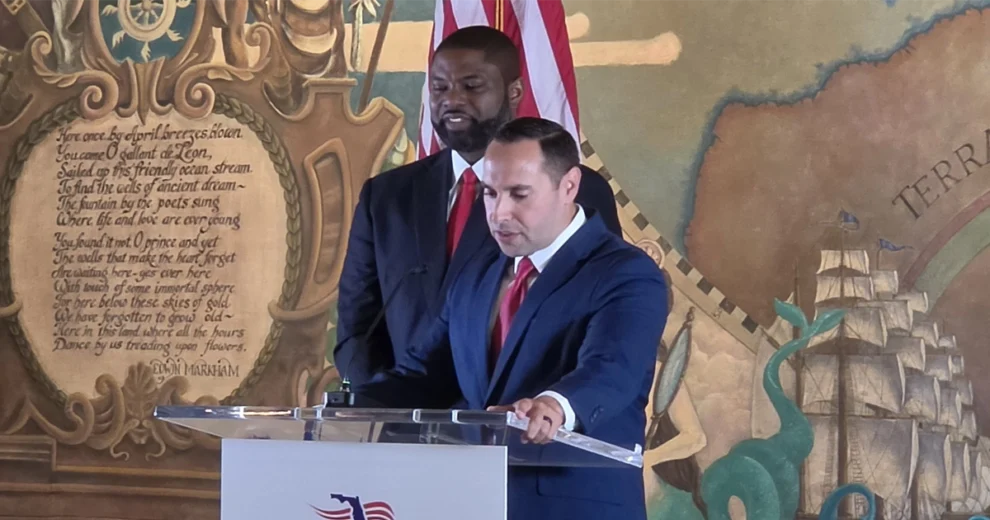
The former Hialeah lawmaker gives Byron Donalds a direct connection to South Florida’s Hispanic electorate while raising new questions about representation and policy
Two days after Bryan Avila was selected as Byron Donalds’ running mate, the significance of the decision extends beyond the completion of Florida’s Republican gubernatorial ticket. Avila’s addition places Miami-Dade County, Cuban-American political identity and South Florida’s affordability concerns closer to the center of the 2026 race for governor.
Donalds, a congressman from Naples who secured the Republican nomination on August 18, announced Bryan Avila as his choice for lieutenant governor at Miami Dade College’s Freedom Tower on August 25. The location connected the announcement to Cuban immigration and the broader history of families who rebuilt their lives in South Florida.
If elected in November, Avila would become Florida’s lieutenant governor. The Donalds-Avila ticket will face Democratic gubernatorial nominee David Jolly and his running mate, former Congresswoman Gwen Graham, in the contest to succeed term-limited Governor Ron DeSantis.
For Miami-Dade voters, however, the more important question is not simply why Avila was selected. It is whether his position on the statewide ticket will translate into meaningful attention to the region’s housing costs, insurance pressures, transportation needs, economic development and growing demand for public services.
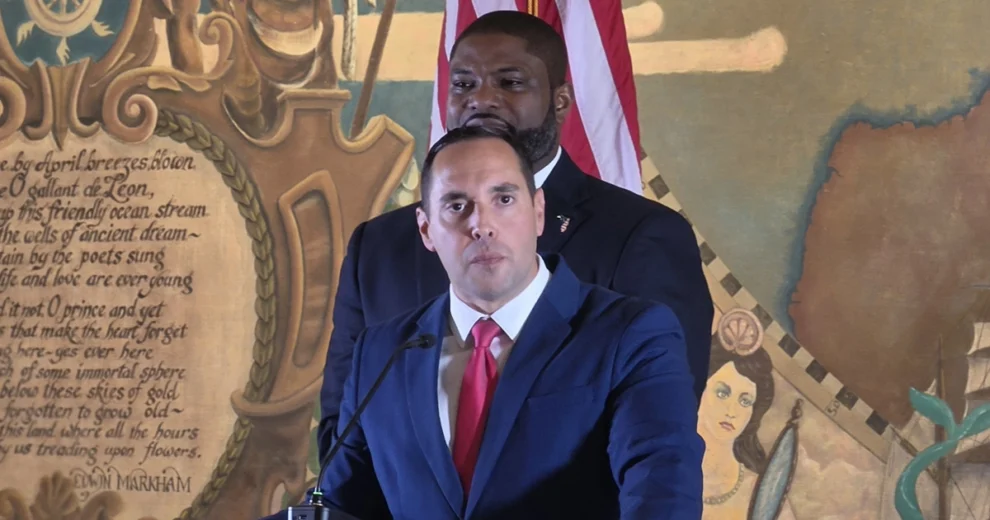
Why Does Bryan Avila Matter to the Republican Ticket?
Avila gives Donalds something particularly valuable in a statewide election: a political partner with longstanding roots in one of Florida’s largest and most diverse counties.
The son of Cuban immigrants, Avila grew up in Hialeah and attended Miami Springs Senior High School. His educational path included Miami Dade College, the University of Miami and Florida International University. He has also served in the Florida Army National Guard.
Bryan Avila began serving in the Florida House of Representatives in 2014. His time in the House overlapped with Donalds’ legislative service before Donalds was elected to Congress in 2020. Avila later won election to the Florida Senate in 2022, representing District 39.
That background allows the Republican campaign to present Avila as a product of Miami-Dade’s immigrant, educational and civic institutions. It also gives the ticket an established connection to Hispanic voters who may be influenced by personal experience with communism, concerns about economic opportunity and debates over the direction of state government.
His selection appears designed to strengthen Donalds’ presence in Miami-Dade, where the Republican Party has made substantial gains in recent elections. Yet Hispanic voters are not a single political bloc. Cuban Americans, Venezuelans, Colombians, Nicaraguans, Puerto Ricans and other communities bring different histories, priorities and voting patterns to the election.
The ticket will therefore need to do more than emphasize Avila’s heritage. It will have to explain how its policies would affect residents across Miami-Dade’s multicultural population.
Avila also brings a legislative record that voters can examine. His work has involved taxation, transportation, elections, economic development, public safety and commercial driving-school oversight. Calle Ocho News previously reported on reforms supported by Avila to protect Florida drivers and legislation concerning public interactions with first responders.
Those measures offer voters a clearer basis for evaluating him than campaign biography alone. As the general election develops, both supporters and critics are likely to examine how his votes and sponsored legislation align with the responsibilities he could receive as lieutenant governor.
What Does Bryan Avila’s Selection Mean for Miami-Dade Residents?
Avila’s move to the statewide ticket immediately affects local representation. The Florida Senate now identifies District 39, which includes part of Miami-Dade County, as vacant. Residents will need clarity about how constituent matters will be handled and when the seat will be filled.
That vacancy gives the story a local consequence beyond campaign strategy. Residents rely on legislative offices for assistance involving state agencies, benefits, licensing and other government concerns. District staff remain listed by the Senate, but voters should monitor official announcements concerning the future of the seat.
The selection also creates expectations that Miami-Dade’s most pressing issues will receive greater attention during the gubernatorial campaign.
Affordability is likely to be among the most important. Housing payments, property taxes, condominium expenses, insurance premiums, electricity bills and grocery prices are placing pressure on families across South Florida. Avila has emphasized property-tax relief during his legislative career, but voters will want details about who would benefit, how local government revenue could be affected and whether proposed changes would help renters as well as homeowners.
Property insurance will require similar scrutiny. Reducing premiums is a widely shared goal, but candidates must explain how their proposals would protect consumers, maintain coverage availability and preserve Florida’s insurance market over the long term.
Transportation, education, healthcare and environmental resilience are also expected to shape the regional debate. Miami-Dade continues to face congestion, changing transit needs, school funding concerns and climate-related infrastructure pressures. Avila’s familiarity with the county may help place these matters before the campaign, although his specific responsibilities in a Donalds administration have not been announced.
The Democratic ticket will offer voters a contrasting direction. Jolly, a former Republican congressman who later joined the Democratic Party, has presented himself as an alternative to partisan division. Graham brings experience in Congress and a family history connected to Florida government through her father, former Governor and U.S. Senator Bob Graham.
Florida voters will ultimately decide between two tickets with different political coalitions and governing priorities. The backgrounds of the running mates will help shape that choice, but the election should turn on specific plans and the ability to carry them out.
Bryan Avila’s selection gives Miami-Dade a prominent voice on the Republican ticket. Whether that prominence produces greater attention to the county’s daily challenges will depend on the policies presented between now and Election Day. As the campaign develops, Calle Ocho News will continue seeking direct answers from the candidates about affordability, insurance, housing, transportation and the priorities of South Florida’s diverse communities. Readers can follow continuing developments through our Miami politics coverage. Subscribe to Calle Ocho News for weekly Miami-Dade updates. Contact Pressnet Corp. for advertising, sponsorship, and partnership opportunities.