
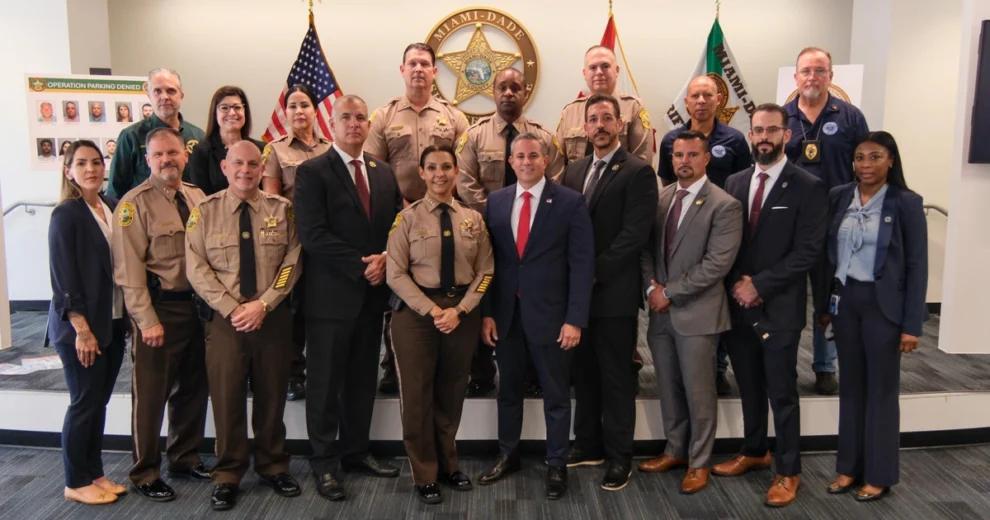
New results show more than 1,000 delinquent properties redeemed as a separate permit-fraud investigation leads to 11 arrests
Two recent Miami-Dade Tax Collector initiatives are drawing attention to the different roles government can play in protecting residents and public resources. One focuses on helping property owners understand and resolve delinquent taxes before their properties move closer to auction. The other involves identifying suspected fraud within a program intended to provide accessible parking to people with qualifying disabilities.
Miami-Dade County Tax Collector Dariel Fernandez announced that 1,046 properties were successfully redeemed during a reporting period that included the launch of the office’s 2026 Tax Deed Application Outreach Program. Separately, information uncovered through the office’s countywide audit of Disabled Person Parking Permit applications contributed to an investigation that resulted in 11 arrests.
Although the initiatives address different public needs, both center on communication, oversight and early intervention. One seeks to help residents correct delinquent accounts; the other is intended to protect the integrity of a public-benefit program from alleged abuse.
Tax Deed Outreach Helps Property Owners Understand Their Options
Between April 1 and August 17, 2026, 2,428 Tax Deed Applications were filed in Miami-Dade County. During that period, 1,046 affected properties were successfully redeemed, representing approximately 43.1% of the applications filed.
A property is generally redeemed when the delinquent taxes and applicable charges are paid before the property is sold through the tax deed process. The reported redemptions do not mean every property was resolved solely because of the outreach program, which formally began on May 1. However, the Miami-Dade Tax Collector’s Office says continued communication, education, follow-up and account monitoring are helping more property owners understand what action they can take.
The Property Tax Roll Administration and Delinquency Unit contacts property owners by telephone, email and mailed correspondence. Staff members explain important deadlines, payment methods and the potential consequences of allowing an account to advance further through the tax deed process.
The program also gives taxpayers opportunities to ask questions about their individual accounts and directs them to online, mail and in-person payment resources. When initial outreach is unsuccessful, the office may conduct additional follow-up and update taxpayer contact information when necessary.
“Behind every property is a person, a family, a small business, or someone who may simply not understand the tax deed process,” Fernandez said. “Our job is not only to collect. We also have a responsibility to educate, communicate, and help taxpayers understand their options.”
Early communication is particularly important because tax deed procedures can be difficult to understand. Ignoring official notices can allow a delinquent account to move closer to a public auction, creating more serious financial and legal consequences for a property owner.
Residents can also review Calle Ocho News’ earlier coverage of how Miami-Dade Tax Collector services have expanded access and community support.
Permit Audit Leads to Fraud Investigation and 11 Arrests
The Miami-Dade Tax Collector’s Office is also participating in a countywide effort to identify suspected fraud involving Disabled Person Parking Permits. The permits are intended to ensure that residents with qualifying disabilities have access to designated parking spaces.
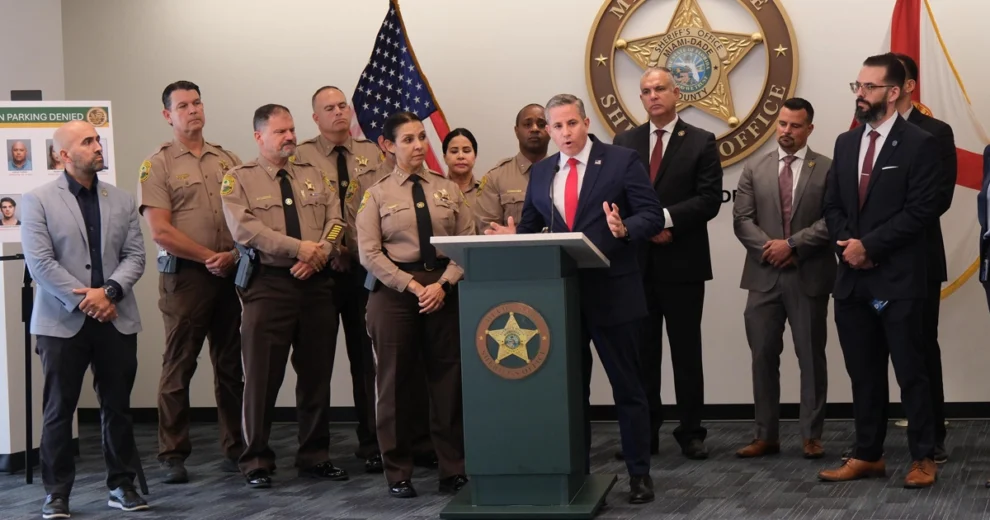
An audit conducted by the Tax Collector’s Office identified applications suspected of having been obtained fraudulently. The office referred its findings and supporting records to the Miami-Dade Sheriff’s Office Public Corruption Section, leading to an investigation known as Operation Parking Denied.
Authorities announced the arrests of 11 individuals: Ryan Carbonell, Roberto Lopez, Jorge Yanes, Irene Oria, Juan Aristizabal, Rafael Brito Diaz, Kristina Drobachevskaia, Alexander Campo, Camilo Padilla, Lianne Quintero and Etian Vila.
According to the Miami-Dade Sheriff’s Office, investigators uncovered an alleged operation in which brokers facilitated fraudulent permit applications for financial gain. Authorities allege that some applications contained disability-certification documents bearing forged physician signatures.
Investigators also reported that physicians whose names appeared on certain forms had never treated or certified the applicants. Other applications were allegedly certified by a physician who died in 2025. The allegations remain subject to the judicial process, and an arrest does not constitute a finding of guilt.
The investigation followed an audit of more than 75,000 permit applications. According to the Tax Collector’s Office, more than 6,000 applications failed the final audit, while thousands of others remain subject to review and verification. An application’s failure to pass an administrative audit does not necessarily establish that a crime occurred; cases involving suspected criminal activity are referred to law enforcement for investigation.
“A disabled parking permit is not a privilege to be bought, forged or stolen,” Fernandez said. “It exists for people who genuinely need it.”
The continuing review reflects a broader effort to prevent the misuse of accessible parking permits while preserving access for residents with legitimate disabilities. It also demonstrates the importance of coordination between administrative offices and law enforcement when an internal audit identifies possible criminal conduct.
Calle Ocho News has previously reported on the Miami-Dade Tax Collector’s efforts to strengthen accountability through reviews of license plate agencies and expanded public-service access. Readers can find additional countywide developments through Miami News coverage.
Together, these initiatives illustrate how public agencies can combine education with enforcement—helping residents resolve problems when possible while investigating conduct that may compromise programs or public trust. Subscribe to Calle Ocho News for weekly Miami-Dade updates. For advertising, sponsorship and partnership opportunities, contact Pressnet Corp. at newsdesk@calleochonews.com.