
The office is opening the first new license plate agency solicitation in more than two decades while auditing thousands of permits and enforcing federal sanctions compliance
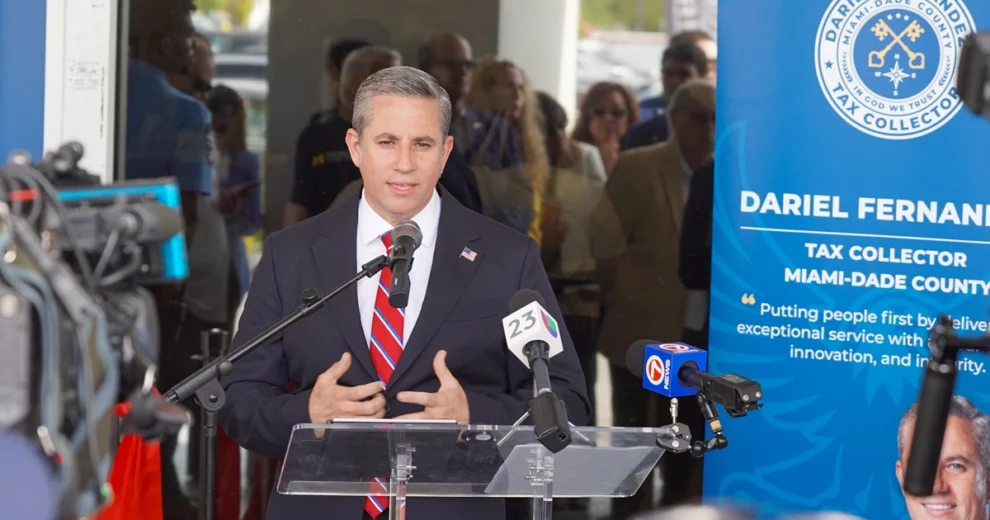
The Miami-Dade County Tax Collector's Office is moving on several fronts at once this month, with a set of announcements that together point to a broader effort to expand public access to motor vehicle services while strengthening oversight of who is allowed to use the system. Under Tax Collector Dariel Fernandez, the office has opened applications for new License Plate Agencies, reported the cancellation of more than 5,600 disabled parking permits following a large-scale audit, and revoked the Local Business Tax Receipt of a company tied to a federally sanctioned Cuban state-owned oil entity. Taken together, the initiatives reflect a focus on accessibility, accountability, and compliance for Miami-Dade County residents and businesses, and they arrive as South Florida continues to navigate rapid population growth and a more complex regulatory environment for local public service.
Expanding Access to Motor Vehicle Services After Two Decades
Beginning July 1, 2026, the Tax Collector's Office accepts applications for new License Plate Agencies, the private operators authorized under agreement with the office to provide motor vehicle registration, title, and related services to the public. According to the office, this represents the first formal opportunity for the establishment of new License Plate Agencies in Miami-Dade County in more than twenty years, and is intended to support continued population growth, improve customer accessibility, and broaden the availability of motor vehicle services countywide. Multiple governmental reviews and planning efforts over the years have examined the need for additional service capacity, and those considerations were incorporated into the new solicitation process. Applicants will be required to demonstrate financial capacity, operational readiness, and business experience, and to submit a business plan along with a geographic need statement describing the public benefit of the proposed location. Each application will undergo administrative review and evaluation by an internal Selection Committee, with qualified applicants advancing to a mandatory interview before recommendations are presented to the Tax Collector for final consideration.
"This initiative is focused on ensuring residents have convenient access to essential motor vehicle services while maintaining the high standards of customer service, accountability, and operational excellence expected by the public," Fernandez said. The expansion reflects a recurring theme across Miami-Dade County's civic and community initiatives aimed at meeting the demands of a growing population.
Audits, Enforcement, and Protecting Public Trust
Alongside expansion, the office has been working to clean up systems already in place. Fernandez announced that his office has audited 41,987 disabled parking permit applications and canceled 5,656 permits as part of a new data-driven fraud detection and compliance initiative that cross-checks records against official databases to identify permits issued to deceased individuals, potentially fraudulent applications, incomplete submissions, and other discrepancies. "After reviewing nearly 42,000 permits, one thing is clear: this system needed a serious cleanup," Fernandez said, adding that canceling more than 5,600 permits "is not a paperwork exercise" but a step to remove from circulation permits that should not have remained active. The office said it expects additional permits may require action as the audit continues, and will refer suspected fraud to the Miami-Dade Sheriff's Office where appropriate. That enforcement posture extends beyond permits.
On June 11, the office revoked the Local Business Tax Receipt for Vanguard Energy following federal sanctions after the company stated it had signed a contract with a Cuban importing agency to lease fuel storage facilities owned by Unión Cuba-Petróleo, known as CUPET, and planned to ship gasoline and diesel fuel to the island. The U.S. Department of State publicly noted that Vanguard Energy had not received any U.S. license for the transaction and that U.S. sanctions remain in effect absent specific licensing, and U.S. Secretary of State Marco Rubio announced on the same day that the United States is sanctioning CUPET under Executive Order 14404. "Any business operating in Miami-Dade County must comply with federal sanctions, state law, and local requirements," Fernandez said, framing the revocation as an application of state and local laws governing business compliance in Miami-Dade County.
Across all three actions, the Tax Collector's Office is signaling a posture that ties together access and accountability for the residents and businesses it serves. As Miami-Dade County continues to grow, the steady mix of expansion, audit, and enforcement is likely to shape how residents experience public services in the months ahead. Subscribe to Calle Ocho News for weekly Miami-Dade updates that keep you informed on the policies, leaders, and decisions shaping South Florida, and contact Pressnet Corp. for advertising, sponsorship, and partnership opportunities to reach one of Miami's most engaged bilingual community audiences.