
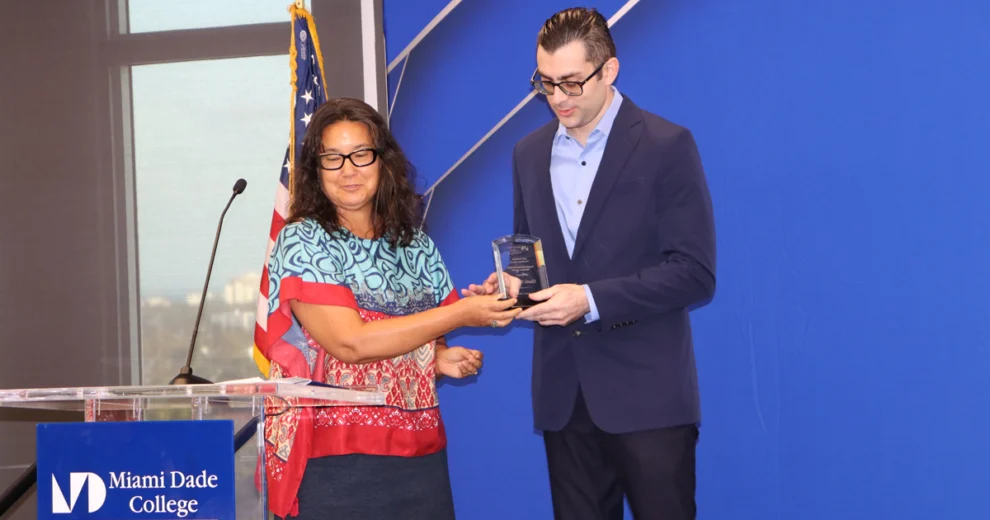
At Miami Dade College's Padrón Campus in Little Havana, Eduardo Hernandez is developing the technical and communication skills needed to turn bilingual ability into a professional career
For Miami Dade College student Eduardo Hernandez, studying translation and interpretation is about more than mastering two languages. It is about helping people communicate, understand one another and overcome language barriers in situations where accuracy can make a meaningful difference. Through MDC's Translation and Interpretation Program at Padrón Campus in Little Havana, Hernandez is gaining specialized training that can prepare him for professional opportunities in fields ranging from healthcare and law to business and finance.
In a county where multiple languages are spoken across homes, workplaces and public institutions, professional translators and interpreters play an important role in connecting people to information and services. Hernandez sees that responsibility as one of the strongest reasons to enter the profession, particularly in a community as culturally diverse as Miami-Dade.
His experience also demonstrates how bilingual students can build on their existing language abilities through formal education, specialized technology and practical training. At MDC, Hernandez is learning that professional translation and interpretation require much more than replacing words from one language with their equivalents in another.
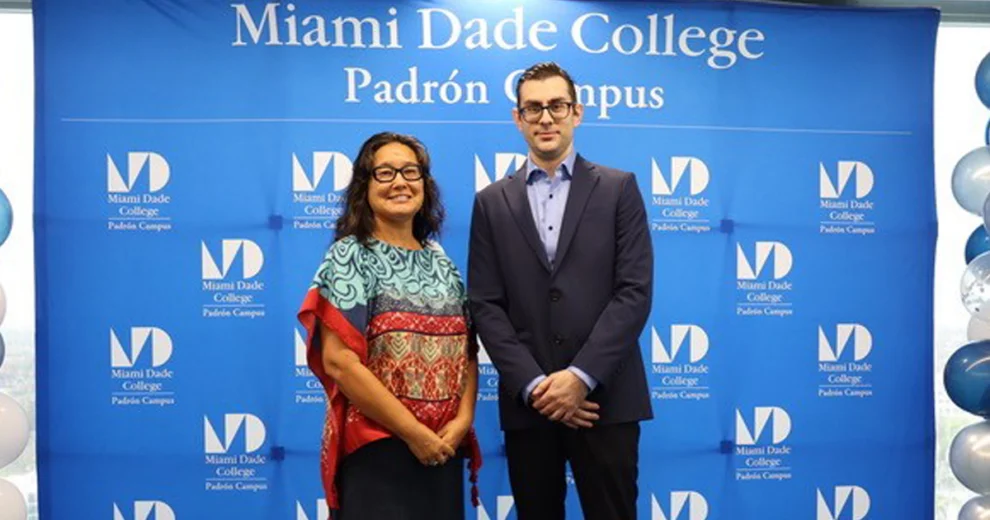
Eduardo Hernandez Develops Professional Skills at MDC Padrón Campus
One of the benefits Hernandez identifies in MDC's Translation and Interpretation Program is the opportunity to learn from an instructor with many years of professional career experience. He values having access to coursework that reflects the demands of different industries, including medical, legal and financial services, where precise terminology and careful communication are essential.
The program is offered at Padrón Campus in Little Havana, a location Hernandez considers particularly convenient. Students can access an on-campus interpretation laboratory for in-person courses, while online classes provide additional flexibility for those balancing their education with work or other responsibilities.
For Hernandez, the training goes well beyond traditional language instruction. In translation courses, students learn to use computer-assisted translation software, including Trados and memoQ, two tools used by professional translators to manage terminology, improve consistency and complete assignments efficiently.
Students also develop research techniques for identifying accurate terminology and learn how to work with different document formats. These skills are particularly important when translating specialized material, where the meaning of a word or phrase may depend on its professional context.
Interpretation courses introduce students to three principal methods: sight translation, consecutive interpretation and simultaneous interpretation. Each requires a different combination of listening, concentration, memory and communication skills.
Sight translation involves orally interpreting written information. Consecutive interpretation requires listening to a speaker and delivering the message after a pause, often with the assistance of structured notes. Simultaneous interpretation requires communicating the message in another language while the original speaker continues talking.
Hernandez explains that students practice note-taking techniques and learn how to reduce the delay between the speaker's words and the interpreter's delivery. These exercises help develop the precision and confidence needed in professional settings.
For students interested in legal interpretation, the program also includes court interpretation courses designed to prepare them for state and federal certification examinations.
What makes the field particularly meaningful to Hernandez, however, is the opportunity to help people communicate.
He believes translators and interpreters serve as bridges between individuals who speak different languages, allowing people to express their ideas and understand one another. That perspective reflects the human responsibility behind a profession often associated primarily with vocabulary and grammar.
From Classroom Training to Future Career Opportunities
As Hernandez continues his studies, he is also learning about the business and professional responsibilities involved in translation and interpretation.
According to Hernandez, MDC's coursework introduces students to assignments that simulate professional translation projects. In addition to practicing language skills, students learn how to establish rates, evaluate assignments and determine appropriate pricing for their services.
The curriculum also includes a recently added course in Localization and Project Management, which introduces students to organizing larger projects involving multiple translators. Localization involves adapting content for particular linguistic and cultural audiences, an increasingly relevant skill for businesses and organizations communicating across international markets.
For Hernandez, these lessons provide insight into how translation and interpretation function as professional services rather than simply language-based activities. Understanding client expectations, project organization and industry technology can help students prepare for different types of assignments and work environments.
He also points to the flexibility of the educational pathways available at MDC. Students seeking additional qualifications or exploring translation as a secondary career can pursue an 18-credit College Credit Certificate in Translation and Interpretation. Hernandez notes that the certificate may be completed within approximately one year, depending on individual circumstances and course scheduling.
Those interested in more extensive preparation can pursue a 60-credit associate degree, which includes additional coursework focused on specialized fields. The program may also benefit individuals already working as translators or interpreters who want to refine their skills and become familiar with professional software.
Hernandez sees the variety of specializations as another attraction of the profession. Someone who begins working with medical terminology, for example, may eventually pursue additional preparation for legal or financial translation. While each specialty requires its own knowledge and professional standards, the possibility of developing expertise in different fields offers opportunities for continued learning.
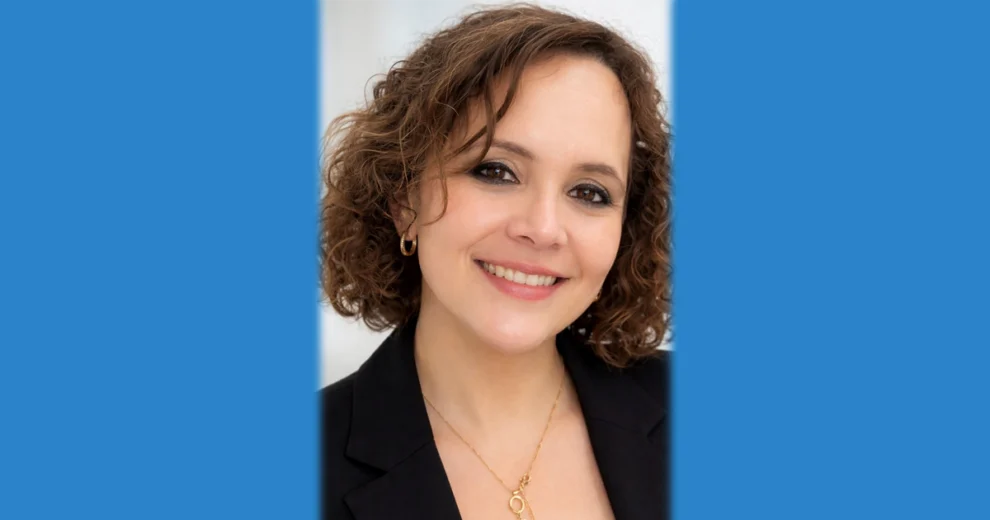
The experiences of MDC graduate Yiny Cuccia provide an additional perspective on the training Hernandez is receiving. Cuccia, who earned an Associate in Science degree in Translation and Interpretation, credits the program's practical instruction with helping prepare her for professional work.
"My favorite part was the hands-on training in the Translation and Interpretation Lab," Cuccia said. "Working alongside passionate peers on real-world legal and medical scenarios built my confidence and honed my ability to make quick, precise linguistic decisions."
Her experience illustrates how the skills Hernandez is developing in the classroom can remain relevant beyond graduation. Cuccia continues to use critical listening, specialized terminology, editing, note-taking and cultural awareness in her professional work.
For Hernandez, the program represents an opportunity to transform his interest in languages into practical expertise while preparing for a profession centered on helping others communicate.
His educational journey also highlights the importance of accessible career training in Little Havana, where Miami-Dade's cultural and linguistic diversity is part of everyday life. As he develops his skills, Hernandez is preparing to contribute to a field that depends not only on language proficiency but also on accuracy, professionalism and an understanding of the people being served.
Subscribe to Calle Ocho News for weekly Miami-Dade updates.
Contact Pressnet Corp. for advertising, sponsorship and partnership opportunities.