
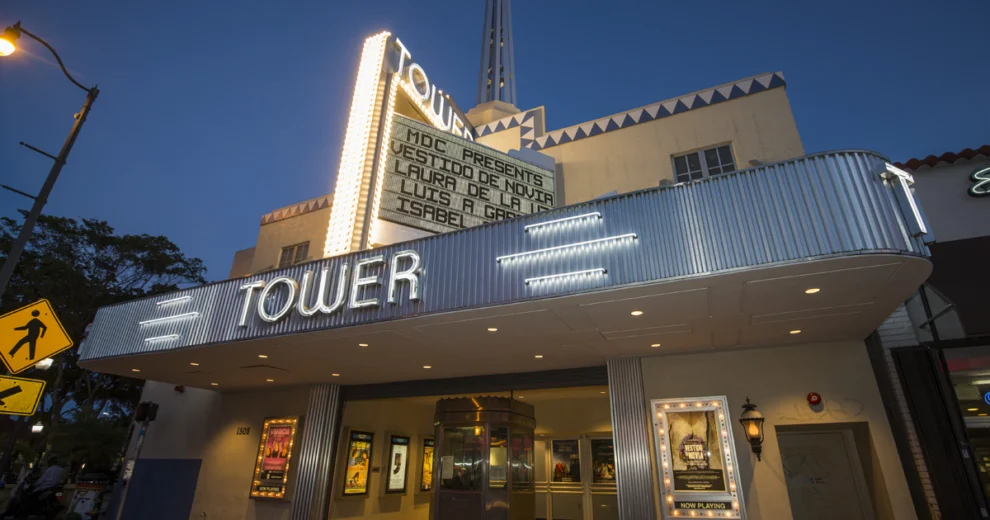
The college will return to the Calle Ocho venue November 1, with plans for improvements, expanded cultural programming and a public reopening in early 2027
Miami Dade College (MDC) will resume management and operation of the historic Tower Theater Miami on November 1, 2026, returning to a Little Havana cultural landmark it operated for more than two decades. The transition comes as the theater prepares to celebrate its 100th anniversary in December and undergo improvements intended to expand its role as a community destination for film, live performances and cultural programming.
Under the new arrangement, MDC's Miami Film Festival will oversee the theater's programming, rentals and daily operations. The venue, located on Calle Ocho next to Domino Park, will remain temporarily closed while facility improvements are completed. Its public reopening is expected in early 2027, with a specific date and programming schedule to be announced later.
The return places the college back in a prominent cultural space closely connected to the history of Little Havana and generations of Miami residents. For Cuban families who settled in the neighborhood during the 1960s, Tower Theater became more than a place to watch movies. Its screenings of English-language films with Spanish subtitles, followed by Spanish-language programming, helped some newcomers become familiar with American culture and improve their English.
MDC President Madeline Pumariega described the theater as part of Miami's cultural identity and a place that brought generations together through film, art and shared experiences. She said the college intends to preserve its history while creating additional opportunities for filmmakers, artists and the broader community.
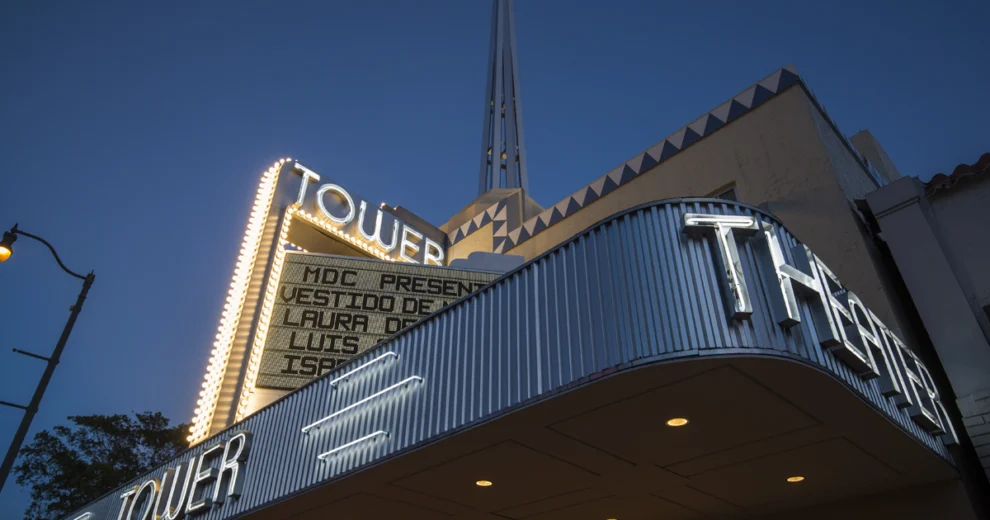
Tower Theater's Next Chapter Includes Technology and Facility Improvements
The transition will involve more than a change in management. MDC and Miami Film Festival are preparing upgrades intended to support the theater's future as both a cinema and a performance venue while maintaining its historic character.
Among the planned additions is LOPU Tech's sound-transparent Cine LEDMAX screen. Once installed, Tower Theater Miami will become only the third cinema in the United States to feature this technology. The improvements will also include updated cinema and performance equipment, allowing the venue to accommodate film screenings and live performances.
Additional renovations will address the visitor experience throughout the building. Updated concessions are expected to expand food and beverage options, while new furniture and lounge areas will provide gathering spaces outside the auditoriums. Plans also include improvements to the box office, with regular staffing to assist patrons and visitors exploring Calle Ocho, along with building repairs and infrastructure upgrades intended to improve comfort and safety.
Miami Film Festival Executive Director James Woolley said the goal is to create an environment where films and performances encourage conversations that continue beyond the theater. He said audiences should be able to discover emerging filmmakers, enjoy live performances and reconnect with a place that has been meaningful to them.
The college is also working with organizers to accommodate existing bookings while scheduling improvement work around previously arranged events. Organizations interested in using the venue can submit new rental requests for 2027 through the Rental Requests section of TowerTheaterMiami.com.
A Century of Cultural History Remains Central to the Theater's Future
Tower Theater Miami first opened in December 1926 with the silent romantic comedy The Palm Beach Girl. Its original design later underwent a significant transformation in 1931, when Wometco commissioned architect Robert Law Weed to redesign the building. The resulting Art Deco appearance became a recognizable part of the Calle Ocho landscape and remains central to the theater's identity.
Its importance grew as Little Havana developed into a center of Cuban-American life. During the 1960s, as Cuban exiles settled in the neighborhood, the theater began offering English-language films with Spanish subtitles and later Spanish-language productions. These screenings helped immigrant families connect with American culture, and some residents credit the theater with helping them learn English and adjust to their new home.
MDC began operating the theater in 2002 through an agreement with the City of Miami. During more than 20 years of management, the college welcomed over 1.2 million visitors. Its programming included independent and international films, Miami Film Festival and GEMS screenings, premieres, filmmaker discussions, local art exhibitions and free educational screenings for students. The theater also provided subsidized rentals for nonprofit organizations.
The college's return follows a period in which management transitioned to the City of Miami after MDC's agreement ended in 2023. The renewed arrangement restores a relationship that helped establish the venue as an important part of the city's cultural infrastructure.
Miami Mayor Eileen Higgins welcomed MDC's return, pointing to the college's experience operating the theater and its commitment to arts programming and historic preservation. She also emphasized the importance of working together to protect a landmark connected to Little Havana's history and the families who helped shape the neighborhood.
The centennial celebration will take place before the theater's anticipated public reopening. A block party is planned for December 10, 2026, beside the theater, marking 100 years since it first opened. The celebration will recognize the neighbors, businesses, patrons, filmmakers and artists who contributed to its history, with additional event details to be announced separately.
Suzy Batlle, owner of Azucar Ice Cream and president of Viernes Culturales, also welcomed the college's return, expressing enthusiasm for the theater's potential to once again serve as a gathering place for culture, music and the arts.
For Little Havana, the theater's next chapter represents an opportunity to reconnect a historic building with the community that helped define its identity. Its future will depend not only on updated equipment and renovated spaces but also on maintaining the cultural connections that made it meaningful to generations of Miami residents.
As MDC prepares to resume operations, the challenge will be balancing preservation with programming that reflects Miami's evolving creative community. The planned centennial celebration and early 2027 reopening offer the first steps toward bringing audiences back to a landmark that has been part of Calle Ocho's story for a century.
Subscribe to Calle Ocho News for weekly Miami-Dade updates.
Contact Pressnet Corp. for advertising, sponsorship and partnership opportunities.