
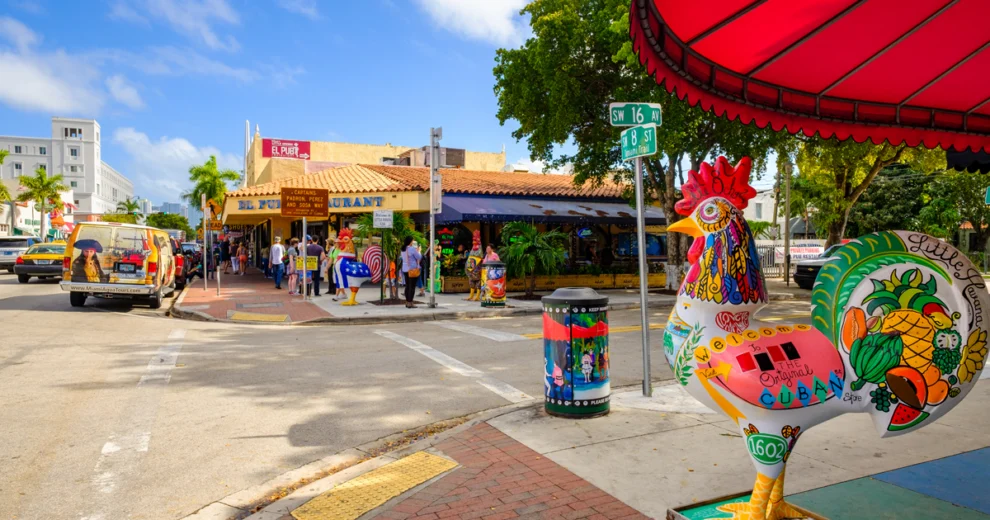
Miami's proposed Calle Ocho revitalization fund would provide $3.5 million annually for cleaning, security, maintenance and other improvements while the city works toward a permanent Business Improvement District
One of Miami's most recognizable cultural and commercial corridors could receive up to $14 million in city funding over four years under a proposal designed to address cleanliness, security, maintenance and economic conditions along Calle Ocho. The plan would create a dedicated Neighborhood Revitalization Fund as Miami simultaneously works toward a longer-term Business Improvement District, or BID, that could eventually give property owners a more direct role in financing and guiding improvements along Southwest Eighth Street.
The proposal would commit $3.5 million annually beginning in fiscal year 2026-27 and continuing for as many as four years, or until a Calle Ocho BID is established, whichever occurs first. The designated area would stretch from I-95 west to Southwest 22nd Avenue and include properties fronting both sides of Southwest Eighth Street.
For residents and businesses, the significance extends beyond the size of the proposed investment. Calle Ocho is simultaneously a neighborhood commercial street, an international tourism destination and one of Miami's most recognizable cultural corridors. The challenge facing city leaders is how to strengthen its economic health and public spaces without losing the character that made the street important in the first place.
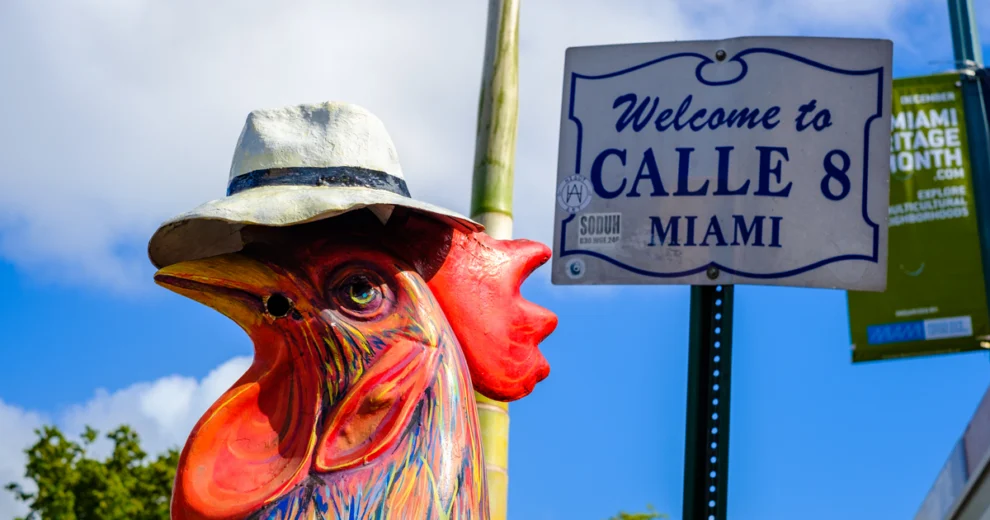
Why Miami is Considering a $14 Million Calle Ocho Investment
The proposed fund comes as city officials and business leaders confront concerns about vacant storefronts, declining foot traffic and the long-term competitiveness of the corridor. Under the plan, the city manager would establish a special revenue account and allocate $3.5 million during each of the next four fiscal years. If all four allocations are made, the city's commitment could reach $14 million.
The money would be restricted to the defined Calle Ocho corridor and could be used for enhancements, improvements, maintenance, security, sanitation and other public purposes. That creates the potential for visible changes ranging from cleaner sidewalks and improved maintenance to enhanced public safety and other measures intended to make the corridor more attractive to residents, visitors and businesses.
District 3 Commissioner Rolando Escalona, who represents the area and is sponsoring the fund, has previously pointed to business closures and "for lease" signs along Southwest Eighth Street as evidence that intervention is needed. Earlier this year, commissioners directed the city manager to evaluate the corridor and begin the process of establishing a Calle Ocho BID.
The two initiatives are related but fundamentally different. The proposed $14 million revitalization fund would use city resources and would not require property owners to approve an additional assessment. A future BID, by contrast, would create a longer-term funding mechanism supported by assessments on properties within the district and would require majority property-owner support before it could be established.
That distinction matters because the city-funded program is designed as a bridge rather than a permanent replacement for the BID. The annual allocations would end after four years or sooner if the BID is successfully created.
Miami has already used business improvement districts in areas including Wynwood, Coconut Grove and downtown's Flagler District. While each district operates within its own circumstances, the broader model is intended to provide concentrated resources for services and improvements beyond what municipal government ordinarily provides.
What Revitalization Could Mean for Businesses, Residents and Calle Ocho's Identity
The potential investment raises a larger question about what revitalization should look like on a street whose value cannot be measured solely through commercial activity. Calle Ocho's restaurants, shops, galleries, music venues and cultural landmarks have helped turn Little Havana into a destination recognized far beyond South Florida. Its identity is also rooted in generations of immigrant entrepreneurship and the businesses that transformed Southwest Eighth Street into a center of Cuban-American and broader Hispanic life.
That history makes the condition of the commercial corridor important beyond the individual businesses operating there. Vacancies can affect pedestrian activity, perceptions of safety and the overall experience of residents and visitors. Conversely, cleaner streets, improved maintenance and greater security can help create conditions in which existing businesses remain viable and new ones are more willing to invest.
A BID could eventually add another layer by giving affected property owners a defined structure for funding supplemental services such as cleaning, beautification, marketing, streetscape improvements, public safety initiatives and programs intended to attract businesses and visitors. Under the proposal being explored by the city, a Calle Ocho BID could operate for as long as 10 years if the required property-owner approval is obtained.
The prospect of additional investment also makes accountability important. If the city ultimately commits millions of public dollars to Calle Ocho, residents and business owners will have a stake in understanding how that money is spent, which improvements are prioritized and whether the investment produces measurable results. Cleanliness and security may be immediately visible, but business retention, occupancy, pedestrian activity and the preservation of cultural character will also help determine whether revitalization is succeeding.
There is another balance the city will have to navigate. Economic development can bring new businesses, investment and visitors, but Calle Ocho's value to Miami is inseparable from its history and cultural identity. Revitalization that strengthens the corridor while allowing longtime businesses and cultural institutions to remain part of its future would carry a different meaning than growth that simply replaces what came before.
If the proposal moves forward, the first $3.5 million allocation would begin with the fiscal year starting Oct. 1. The longer-term question will be whether property owners ultimately support establishing the BID and, if they do, what priorities they choose for the district. Together, the temporary city investment and proposed permanent district could represent one of the most significant coordinated efforts in years to address the future of Calle Ocho.
For a street that serves residents, businesses and visitors while carrying an outsized place in Miami's cultural history, the measure of success will not simply be how much money is spent. It will be whether that investment leaves Calle Ocho cleaner, safer and economically stronger while protecting the character that made people care about the street in the first place.
Subscribe to Calle Ocho News for weekly Miami-Dade updates.
Contact Pressnet Corp. for advertising, sponsorship and partnership opportunities.