


Andrew Otazo, founder of ARO Communications, is transforming civic engagement in South Florida by trading in sermons for satire and lectures for laughs, proving that humor is the most powerful tool for change
For too long, the environmental movement in Miami has struggled with a persistent problem: disconnection. Community leaders often find themselves talking in silos, delivering stern lectures that fail to resonate with a diverse, fast-paced city. But one local voice, Andrew Otazo, is changing the script entirely.
A native Miamian and the head of his own agency, ARO Communications, Otazo has developed a foundational philosophy that’s as simple as it is effective: communication must be valuable in and of itself. He takes complex, often-ignored issues, like dog waste pollution or mangrove trash, then wraps them in humor, celebration, and genuine community engagement. He proves that you don't have to choose between having fun and saving the planet.
Unmasking dog waste pollution
The conversation around environmental stewardship often focuses on major industrial polluters and large-scale infrastructure projects. Yet, one of the most insidious threats to Miami’s crown jewel, Biscayne Bay, lies right on its sidewalks: dog waste.
As Otazo highlights, one of the biggest misconceptions is that dog feces is harmless fertilizer. "It's just not," he explains. Dog feces do not decompose effectively when left on lawns or medians. It simply waits for the rain. At that point, it washes down into the gutter, flowing unfiltered directly into the Bay.
"We don't have a total survey of how much dog poop contributes to algae blooms and to fish kills," he notes, "but it's thought that it is a major contributing factor along with fertilizer runoff." Beyond the ecological damage, unpicked waste also spreads bacteria, posing a threat to community health.
Instead of a scolding public service announcement, Otazo and his partners at Debris Free Oceans tackled this issue with celebration: the Pup Carnival.
"We wrapped it in this celebration of Miami's dogs," Otazo describes. The event gave pet owners a space to enjoy fun activities, buy from local vendors, and have a good time. It’s through this positive, celebratory vehicle that the message about responsible pet ownership is delivered in a "respectful and... genuine way." By providing value first, a great time with their beloved pets, attendees are open to receiving the educational message.
Building community through cleanups
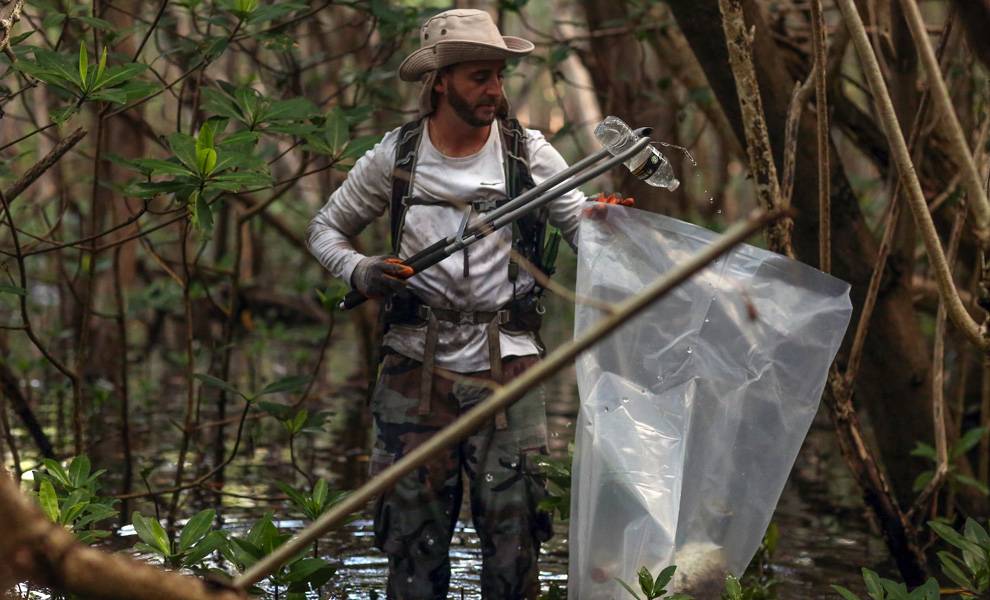
His direct, on-the-ground work evidences Otazo’s commitment to action. For eight years, he has been involved in cleaning Miami's mangrove forests, personally removing a staggering 38,485 pounds of trash.
His work with Debris Free Oceans perfectly encapsulates his unique blend of civic duty and social engineering. Otazo recognizes that while Miamians universally care about keeping the ocean clean, an issue he describes as one of the few things "that's not political," the environmental community often fails to reach a wider audience.
His solution? Turn environmental work into an opportunity for connection.
This strategy culminated in the viral Miami’s Trashiest Singles event. Recognizing that many single friends complain about the difficulty of dating in the city, Otazo created an innovative filter. By hosting a cleanup event, participants could guarantee that anyone they met would be "civically engaged and care about the environment."
"The value they get is that maybe they just have a good time. Maybe they find a new friend. Maybe they find a date," he explains. By embedding the cleanup into a high-value social experience, people participate willingly and eagerly, rather than feeling obligated.
The campaign materials themselves reflect this playful, authentically local tone. Otazo recounted a flyer for the event that quickly went viral:
“The top image was... three people at a club with their shoes off. And the text said, 'Don't be like these patasucias [dirty feet].' And then the bottom image was three people in the mangroves [cleaning trash]... It's like, 'Be like these patasucias.'”
This use of hyper-local, self-deprecating humor and authentic Miami vernacular is the agency’s calling card, demonstrating that engagement beats enforcement every time.
Redefining Miamian responsibility
Otazo’s extensive time in the mangroves has granted him a crucial understanding of the pollution pipeline, one he is keen for all Miamians to grasp.
When people see him cleaning the mangroves, they often express shock, thinking the trash must come from the ocean. However, he clarifies the reality: the vast majority of litter originates right in the city.
"People litter on the side of the road, the sidewalk, and when it rains, that goes into the gutter and there's no filtration whatsoever. And that trash goes right into the bay," he states. This fact carries a profound implication: what a resident does in Hialeah or West Kendall directly impacts the health of the coastline. Recognizing this helps build a culture where everyone takes personal responsibility.
Otazo thinks the city can best address environmental problems like pollution runoff and heavy rainfall by focusing on cultural change and natural solutions, not just expensive projects like seawalls.
He dismisses the idea of relying on police to enforce dog waste cleanup, preferring social pressure and education. "It has to be cultural," he insists. If the community is educated and expects people to pick up trash, that self-reinforcing social pressure is "way more powerful" than constant ticketing.
A future connected to nature
Ultimately, Otazo’s vision is about changing the fundamental relationship Miamians have with their environment. He opposes massive, disruptive projects, such as the 50-foot seawall once proposed for Brickell, in favor of working with nature."The mangroves are one of those solutions," he says, noting their durability and ability to absorb storm energy better than concrete barriers. As Miami faces threats from stronger hurricanes, rainfall, and flooding, Otazo urges a shift from a perspective of separation from nature, which leads to building walls, to one of connection.
"I desperately want my grandkids to be able to live in the city. And in order for that to happen, we have to kind of change the way we see ourselves in this environment," he concludes. Through his involvement with ARO Communications and Debris Free Oceans, Andrew Otazo uses humor and community events to encourage people in Miami to care for the environment. His efforts help build a stronger and more responsible city for the future.
Stay Connected
Keep up with what's happening in Miami by signing up for the Calle Ocho News newsletter.
We offer advertising options to help your brand get noticed in the local community. To learn more, contact Pressnet Corp.



Add Comment