
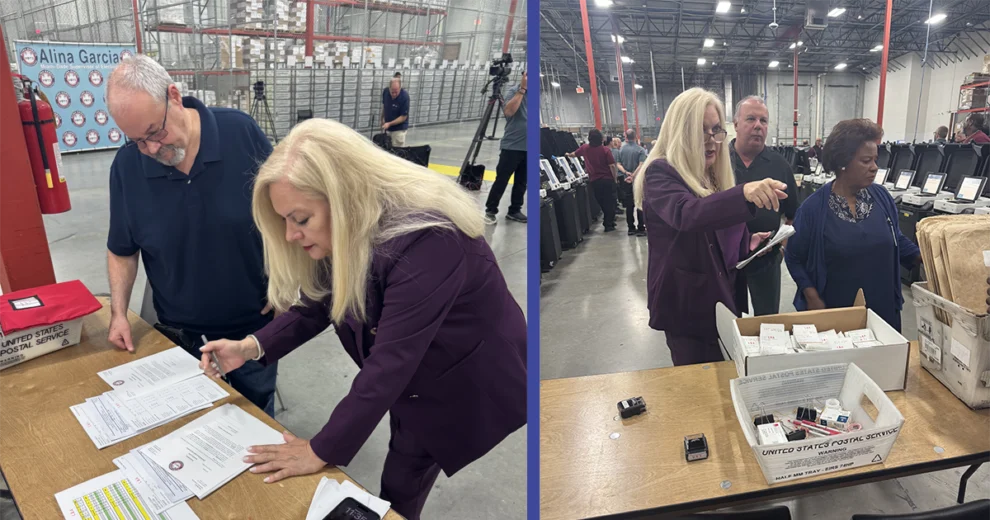
Supervisor of Elections Alina Garcia opened the testing process to public observation as the county prepared voting equipment for the 2026 General Election
Miami-Dade County scheduled a public examination of its voting equipment and ballot-tabulation systems for October 14, 2026, as preparations intensified for the November 3 General Election. The state-required procedure, known as Logic and Accuracy (L&A) testing, was intended to verify that voting machines could accurately record and count ballots before being deployed to polling locations throughout the county.
The testing was scheduled for 10 a.m. at the Miami-Dade County Supervisor of Elections Headquarters, located at 2700 NW 87th Avenue in Doral. Supervisor of Elections Alina Garcia and her elections team invited candidates, political party representatives, members of the media and the general public to observe the process. Garcia was also expected to answer questions following the demonstration.
The examination represented an important step in election preparation because voting equipment must be checked before it is placed into service. For Miami-Dade residents, the public demonstration offered an opportunity to understand how election officials evaluate the systems responsible for processing ballots and reporting results.
The county had conducted similar testing ahead of the August Primary Election, making the October procedure part of its regular election preparation process rather than an unusual response to a particular concern.
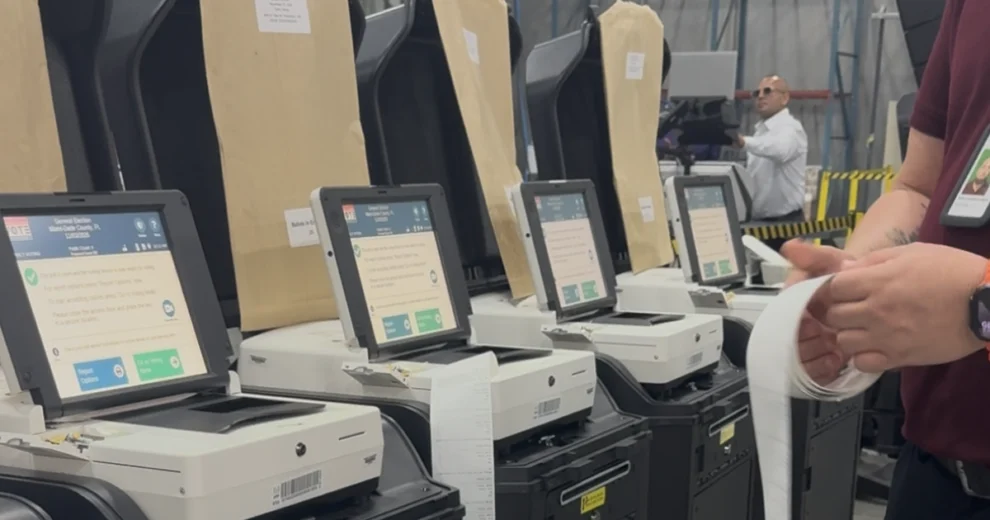
How Election Officials Verify Voting Machine Accuracy
Logic and Accuracy testing uses ballots containing predetermined voting selections to evaluate whether election equipment functions correctly. Because officials know the expected results before the test begins, they can compare the totals produced by the machines with those predetermined outcomes.
According to the Miami-Dade County Office of the Supervisor of Elections, the process involves running test ballots through voting equipment and reviewing whether each selection is accurately captured and reported. The resulting totals are compared with the expected figures to identify discrepancies that may require further investigation or correction.
This approach provides a controlled method of evaluating the equipment before actual election ballots are processed. Rather than relying solely on manufacturers' specifications or routine maintenance, election officials use known test results to assess whether the systems perform their intended functions.
The examination also helps establish whether equipment is ready for deployment to early voting sites and Election Day polling locations. Although Logic and Accuracy testing cannot eliminate every possible operational problem, it provides a documented procedure for detecting certain errors before voters begin casting ballots.
Garcia emphasized the importance of making the process visible to the public.
“Transparency and accuracy are fundamental to the trust voters place in our elections,” Garcia said in the county's official announcement.
She explained that public testing allows residents to observe the procedures used to prepare equipment for accurately recording and tabulating votes in the November election.
The opportunity for public observation was particularly relevant because election technology and ballot-counting procedures are not always familiar to voters. Allowing candidates, political party representatives and residents to observe testing provides a clearer understanding of how election officials check equipment performance.
It is also important to distinguish pre-election equipment testing from post-election auditing. Logic and Accuracy testing evaluates how machines process known test ballots before an election, while audits conducted after voting examine aspects of the completed election and its results. Both serve different functions within the broader election administration process.
What the Testing Means for Miami-Dade Voters
The October 14 testing was scheduled less than three weeks before the November 3 General Election, when Miami-Dade voters would participate in federal, state and local contests. Some municipalities, including the City of Miami, also had local referendum questions on the ballot.
With voters making decisions on candidates and public policy issues, the accuracy and reliability of election equipment remained a central administrative responsibility. The county's preparations extended beyond the machines themselves to include ballot handling, voter information, equipment deployment and the management of polling locations.
The timing was particularly significant because early voting was scheduled to begin October 19 at 28 locations throughout Miami-Dade County and continue through November 1. Testing equipment before that period gave election officials an opportunity to identify potential technical problems before voting operations began.
For residents planning to vote by mail, the county also established an October 22 deadline, at 5 p.m., to request that a ballot be mailed to their home. Eligible voters could obtain information about voting methods, sample ballots, polling locations and election deadlines through the Supervisor of Elections website.
The testing also highlighted the importance of public access to election administration. Observers were invited regardless of political affiliation, and the process focused on verifying equipment performance rather than evaluating candidates, political parties or election outcomes.
Miami-Dade's population and geographic size make election preparation a substantial logistical undertaking. Voting equipment must be prepared for use across numerous communities, while election workers must follow consistent procedures to support accurate ballot processing.
The county's official announcement described the October 14 event as a required equipment-verification procedure. However, the information available for this report did not establish the final results of the examination or confirm whether every tested machine passed. Those findings would require confirmation from the Supervisor of Elections.
As the November 3 General Election approached, the scheduled testing illustrated one of the safeguards built into the election process. Checking equipment against known results and allowing the public to observe the procedure provided a practical way to examine how voting systems were prepared before ballots were cast.
For Miami-Dade voters, understanding these preparations was an important part of understanding how elections are administered and how officials work to maintain accuracy, accountability and public confidence.
Subscribe to Calle Ocho News for weekly Miami-Dade updates. Contact Pressnet Corp. for advertising, sponsorship and partnership opportunities.