
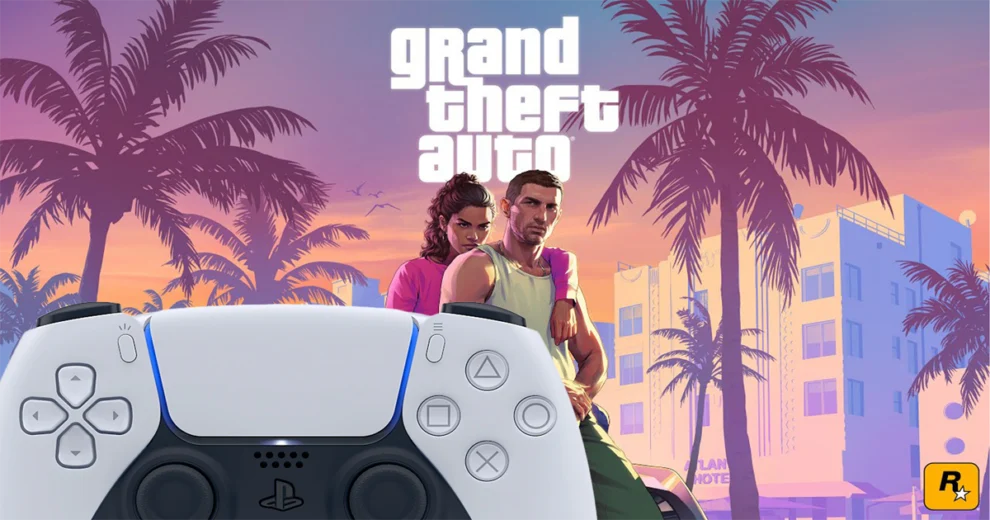
As one of entertainment’s biggest franchises prepares to return to its fictional version of South Florida, a proposed Miami-Dade partnership with GTA is raising a bigger question about who gets to define Miami
Miami has spent decades becoming a global brand. Now one of the world's biggest entertainment franchises is preparing to sell its own version of it. With Grand Theft Auto VI set in the fictional state of Leonida and its Miami-inspired Vice City, reported discussions between Miami-Dade County and Rockstar Games about promoting the game's launch have produced an unusually Miami debate: Is this an enormous opportunity to put the county at the center of a global cultural moment, or would Miami-Dade essentially be helping market a fictional identity built around crime and violence?
The reported ideas are difficult to ignore. They have included temporarily branding portions of Miami International Airport as “Vice City Airport,” wrapping Metromover trains with Vice City imagery and installing GTA-themed manhole covers as part of promotional activations connected to the game. WLRN reported that the ideas followed meetings between Mayor Daniella Levine Cava's administration and Rockstar Games.
None of the proposals has been presented at a public Miami-Dade County Commission meeting for approval, according to WLRN. But the concept has already triggered opposition from Commissioner Juan Carlos “JC” Bermudez and Miami-Dade Sheriff Rosie Cordero-Stutz, turning what might have been an entertainment marketing campaign into a debate over public assets, government transparency and Miami's identity.

The Real Miami Meets the World's Version of Vice City
There is an obvious reason Miami-Dade might be interested. Few entertainment properties can generate the attention surrounding a new Grand Theft Auto. GTA VI's fictional world draws heavily from South Florida's recognizable landscape and culture, placing Miami imagery before an enormous international audience. That creates a potentially valuable connection between a real destination and a cultural product already borrowing from it.
Miami-Dade has also worked deliberately to position itself as more than a traditional sun-and-beach destination. The region increasingly markets its arts, food, neighborhoods, major events and multicultural identity to an international audience. In a recent Calle Ocho News interview, Greater Miami Convention & Visitors Bureau President and CEO David Whitaker described a tourism strategy increasingly focused on international visitors, cultural identity and Miami's evolution as a high-value global destination.
That makes the GTA VI opportunity more complicated than simply being “for” or “against” a video game. A creative campaign tied to one of the world's most anticipated entertainment releases could generate attention that conventional destination marketing would struggle to replicate. But Miami-Dade's involvement would carry something private advertising does not: the endorsement, or at least participation, of local government.
That distinction is central to Bermudez's objection.
“I still cannot believe that we are even considering temporarily rebranding important County assets, including Miami International Airport, as ‘Vice City Airport,’” Bermudez said in a joint statement with Cordero-Stutz.
He argued that Miami-Dade has spent decades developing its reputation as a destination for tourism, investment, business and opportunity and questioned whether county resources should be used to promote a fictional version of the community centered on criminality. Bermudez has also called for disclosure of the proposed partnership's public benefit, costs and use of county resources.
When Does a Clever Promotion Become a Public Decision?
For Cordero-Stutz, the conflict is more direct. The sheriff pointed to a franchise whose gameplay incorporates robbery, carjacking, drug trafficking, shootings and other criminal activity while local law enforcement agencies are simultaneously trying to prevent those crimes and strengthen public trust. She said county leaders should consider “the message we send when our own government promotes a fictional identity centered around many of those same crimes.”
The controversy therefore raises a question extending beyond GTA VI: How far should a local government go when turning public infrastructure into commercial entertainment branding? A private hotel, nightclub, billboard or retailer choosing to capitalize on Vice City is fundamentally different from Miami International Airport or Metromover doing so. MIA and the transit system are public assets, used by residents and visitors and operated under county government.
And Miami International Airport is not an ordinary advertising venue. For millions of travelers, it is effectively the front door to Miami-Dade. Temporarily attaching the “Vice City” identity to it would therefore carry symbolic weight even if the campaign were clearly understood as a promotion. There is also the question of public benefit. If a partnership were to move forward, residents could reasonably want to know what Miami-Dade receives in exchange, whether taxpayer or county resources would be used, how long activations would remain in place, what approvals are required and whether Rockstar Games would pay for access to public assets.
Those questions have become more significant because, as WLRN reported, the proposals had not been brought before commissioners in a public meeting when Bermudez raised his objections. He told the outlet that residents should have an opportunity to weigh in and that he would vote against the proposal if it came before him.
There is something unmistakably Miami about the entire controversy. The city has inspired movies, television, music, fashion and video games for generations, often through exaggerated versions of its glamour, nightlife, wealth and crime. Vice City is another fictional Miami — except this time the scale of the audience could be extraordinary.
That does not automatically make a partnership good or bad. It makes the terms, transparency and distinction between Miami borrowing the game's global audience and the game borrowing Miami's public identity especially important.
GTA VI does not need Miami-Dade government to make Vice City famous. The more consequential question is whether the real Miami needs Vice City badly enough to put its own name — and its public assets — behind it. Subscribe to Calle Ocho News for weekly Miami-Dade updates. Contact Pressnet Corp. for advertising, sponsorship and partnership opportunities.