
Three recent initiatives highlight the Tax Collector's expanding responsibilities in public services, regulatory compliance and protecting Miami-Dade residents
Miami-Dade County Tax Collector Dariel Fernandez is addressing three significant issues affecting residents and businesses: the introduction of a digital disabled parking permit system, assistance for individuals receiving driver license cancellation notices, and potential local enforcement measures following the interception of biodiesel shipments destined for a sanctioned Cuban company.
Although the matters involve different areas of government, they share a common focus on regulatory compliance, public accountability and the responsibilities of the Tax Collector's Office. The developments also illustrate how the office's work extends beyond collecting taxes to administering essential services and reviewing matters involving businesses operating within Miami-Dade County.
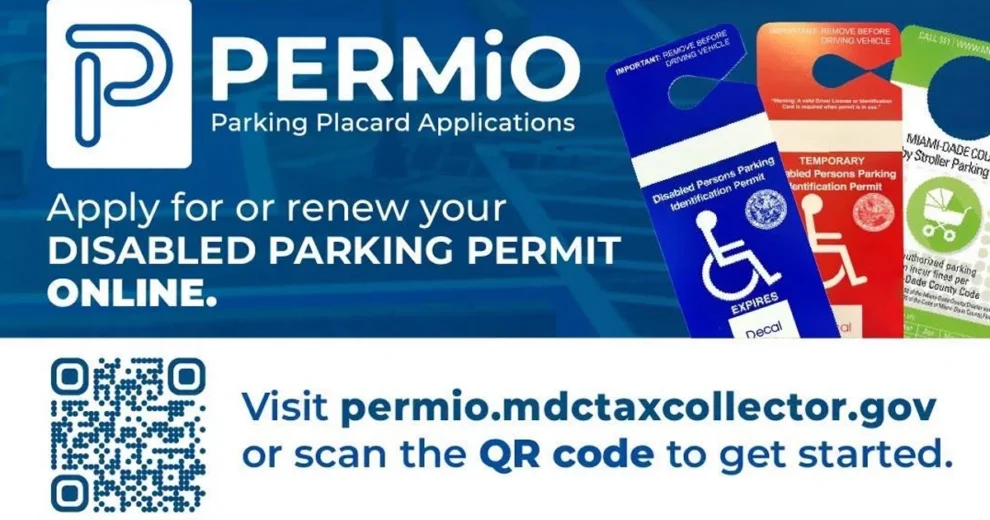
The most immediate changes involve services that residents depend on for transportation and accessibility. A new online platform, PERMiO, is designed to simplify disabled parking permit applications while reducing opportunities for fraud. Meanwhile, residents receiving state-issued driver license cancellation notices are being encouraged to seek assistance before their documentation deadlines expire.
Fernandez has also addressed a federal investigation involving approximately 620,000 gallons of biodiesel reportedly intercepted before reaching Cuba, outlining circumstances under which his office could consider action against businesses found to have violated applicable laws.
Modernizing Parking Permits and Helping Residents Protect Their Driver Licenses
The Miami-Dade County Tax Collector's Office is strengthening its efforts to combat disabled parking permit fraud through PERMiO, a secure digital system that allows residents to apply for or renew disabled parking permits online. The platform also enables authorized medical providers to complete required medical certifications electronically, reducing reliance on paper forms and unnecessary office visits.
On Friday, October 9, Miami-Dade County Tax Collector Dariel Fernandez highlighted the system during a press conference alongside law enforcement representatives, medical professionals, disability advocates, community organizations and elected officials. The presentation included a live demonstration of PERMiO and an explanation of the safeguards designed to prevent fraudulent applications.
The initiative comes amid an extensive countywide review of disabled parking permits. According to the Tax Collector's Office, 129,066 parking placard records have been reviewed, with 8,384 failing the final audit and 6,036 permits canceled in the state's system. The office's enforcement efforts have also helped lead to 11 arrests through Operation Parking Denied, conducted in collaboration with the Miami-Dade Sheriff's Office.
The review also uncovered suspicious medical certifications bearing the name of a deceased physician, with signatures that did not match official state records. These findings raised concerns about vulnerabilities in the paper-based application process and highlighted the need for stronger verification measures. However, a failed audit does not necessarily establish fraudulent activity in every case.
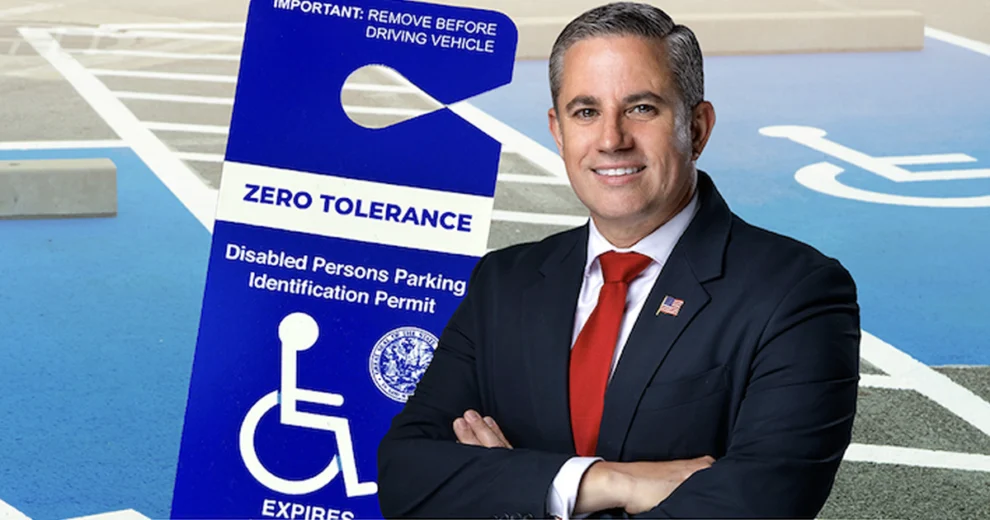
"When someone abuses a disabled parking permit, they take that access away from a person who needs it. That is unacceptable. And our office is taking action, our goal is to end disabled parking permit fraud and protect access for the people who need it." Fernandez said.
PERMiO was developed entirely in-house by the Tax Collector's Office, avoiding the potentially hundreds of thousands of dollars associated with comparable commercial software solutions. The system is intended to strengthen verification procedures by reducing the use of paper medical certifications that could potentially be altered or falsified. At the same time, electronic processing makes the application process more convenient for residents with mobility limitations and others who face difficulties visiting government offices.
The system also simplifies renewals for residents with permanent disabilities. Under current guidance, permanent permits must be renewed every four years, but a new medical certification is not required at the first renewal. Updated medical certification is generally required at the following renewal, approximately eight years after the initial certification.
The Tax Collector's Office has also reported interest from other Florida counties exploring the possibility of adopting PERMiO, potentially extending the benefits of the locally developed system beyond Miami-Dade County.
"A disabled parking permit is a lifeline. Our job is to protect it and make sure it reaches the people who need it." Fernandez said.
The office is also responding to concerns involving driver license and identification card cancellation notices issued by the Florida Department of Highway Safety and Motor Vehicles (FLHSMV).
In an October 5 advisory, Fernandez urged residents receiving an "Order of Cancellation" to review their documentation and contact his office before the cancellation takes effect. The notices inform affected individuals that their state records are missing required proof of identity and direct them to present appropriate documents for verification.
The requirements may involve immigration documentation, including Permanent Resident Cards, Employment Authorization Documents or qualifying passports accompanied by supporting records. Depending on the circumstances, an expired employment authorization document may be considered alongside other valid documents establishing lawful presence. Acceptance remains subject to applicable requirements and verification.
Fernandez emphasized the consequences that losing a driver license can have on working families, particularly those who rely on personal transportation for employment, school and medical appointments.
"For a working family, a driver license means being able to get to work, take your children to school, and care for the people who depend on you," Fernandez said. "My message to residents is simple: Do not ignore it, and do not wait until the last minute." Fernandez said.
FLHSMV remains responsible for issuing cancellation orders and establishing statewide licensing requirements. The Tax Collector's Office assists with document reviews and eligible transactions but cannot guarantee approval in every case. Residents needing assistance can contact the office at 305-375-5448 or visit mdctaxcollector.gov to find service locations and schedule appointments.
Federal Biodiesel Investigation Raises Questions About Local Business Accountability
Beyond resident services, Fernandez has addressed reports that federal authorities intercepted 90 shipments of biodiesel destined for ENETEC S.A., a Havana-based fuel wholesaler identified in his statement as an entity sanctioned by the U.S. Department of the Treasury's Office of Foreign Assets Control (OFAC).
According to information attributed to Homeland Security Investigations, U.S. Customs and Border Protection and the Department of Commerce's Bureau of Industry and Security, the shipments contained approximately 620,000 gallons of biodiesel valued at nearly $3 million.
Of those shipments, 71 tanks containing approximately 500,000 gallons were reportedly intercepted at Port Everglades in South Florida. Another 19 shipments containing approximately 120,000 gallons were intercepted at the Port of Houston.
The federal investigation remains ongoing. According to the Tax Collector's statement, the exporters allegedly responsible have not been publicly identified, and no related criminal charges had been announced at the time of his remarks.
Fernandez said his office would evaluate any verified evidence involving businesses operating within Miami-Dade County if federal investigators determine that violations of sanctions or export restrictions occurred.
Potential local action could include reviewing a company's Local Business Tax Receipt and initiating revocation proceedings when authorized by law. Such action would depend on the evidence, applicable legal authority and due process.
"This is not about making accusations before the facts are known. It is about making our position unmistakably clear." Fernandez said.
The distinction between federal and local responsibilities is important. The Tax Collector's Office is not conducting the federal investigation and does not determine whether federal export or sanctions laws have been violated. Its potential role would be limited to matters falling within its jurisdiction after receiving credible and verified information.
For Miami-Dade's international business community, the investigation highlights the importance of understanding export restrictions and sanctions compliance. It also carries particular significance in South Florida, where commercial activity involving Cuba remains closely connected to federal policy and the Cuban exile community.
Taken together, the three developments reflect different aspects of local government responsibility. PERMiO seeks to improve accessibility while protecting the integrity of disabled parking permits. The driver license advisory focuses on helping residents respond to state documentation requirements. The biodiesel statement establishes how the Tax Collector intends to evaluate potential local business violations if federal authorities produce supporting evidence.
The effectiveness of these efforts will ultimately depend on implementation, clear communication with residents, and consistent application of the law. For Miami-Dade residents and businesses, understanding the available services, documentation requirements and limits of local authority remains essential.
Subscribe to Calle Ocho News for weekly Miami-Dade updates.
Contact Pressnet Corp. for advertising, sponsorship and partnership opportunities.