
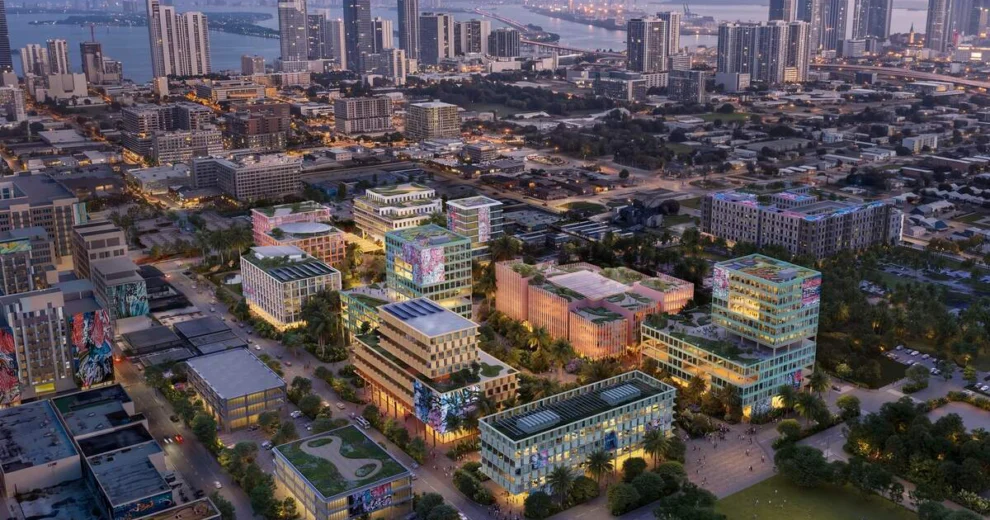
The planned 35-acre campus could reshape Miami’s education and technology landscape while creating new pathways for South Florida students to study, work and build careers at home
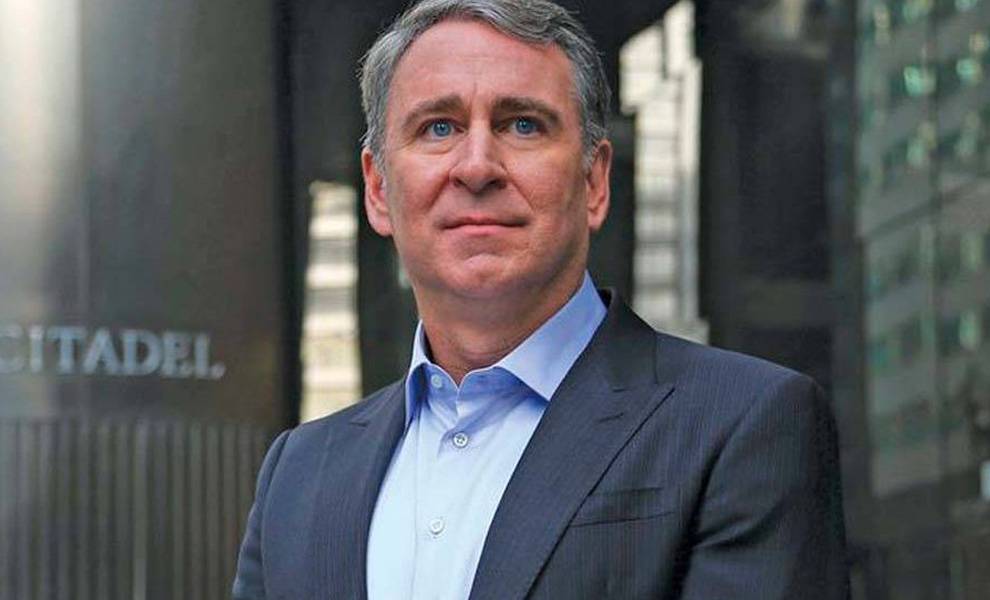
Miami’s evolution as a center for technology, finance and innovation is entering a new phase with plans for Carnegie Mellon University Miami, a full-scale university campus expected to rise in Wynwood with $2 billion of a historic $3 billion commitment from Citadel founder and CEO Ken Griffin.
Carnegie Mellon University announced that the new 35-acre campus is expected to eventually support more than 3,500 undergraduate, master’s and doctoral students, nearly 300 faculty members and more than 600 staff. Construction is slated to begin in 2027, with the first students expected in 2028, pending regulatory approvals.
For Miami-Dade, however, the significance extends beyond the size of Griffin’s gift. The arrival of a major research university in the heart of Wynwood could strengthen the region’s ability to educate students for high-growth industries, attract researchers and employers, and retain young people who might otherwise leave South Florida to pursue specialized degrees and careers.
A Major University Takes Shape in the Heart of Wynwood
Of Griffin’s $3 billion commitment, $2 billion will support the launch of Carnegie Mellon University Miami. The remaining $1 billion will go to Carnegie Mellon’s Pittsburgh campus, including $500 million for its School of Computer Science, which will be renamed the Kenneth C. Griffin School of Computer Science. Carnegie Mellon describes the overall commitment as the largest individual gift in the history of higher education.
The Miami campus is intended to be considerably more than a small satellite operation. Carnegie Mellon says it will function as a comprehensive university campus where education and research are both central to its mission. Plans include student housing as well as spaces for research laboratories, venture studios and collaboration among students, faculty, businesses and public-sector partners.
Its academic structure is also expected to depart from the traditional model built primarily around individual majors and departments. The university plans to organize education and research around major societal challenges, initially focusing on human health and biological discovery, national security and strategic capabilities, energy and climate resilience, and advanced manufacturing and industrial transformation.
That approach builds on Carnegie Mellon’s established strengths in computer science, artificial intelligence, robotics and engineering. The university is currently ranked No. 14 among national universities in the 2027 U.S. News & World Report rankings, while its undergraduate computer science program is ranked No. 1, according to Carnegie Mellon.
The location adds another dimension to the project. Wynwood has undergone a dramatic transition from an industrial and warehouse district into an arts, entertainment, residential and increasingly technology-oriented neighborhood. The university campus now promises another significant change by introducing thousands of students, researchers and employees into an area already experiencing substantial redevelopment.
The Bigger Question is How Miami Residents Connect to the Opportunity
For families across Miami-Dade, one of the most consequential parts of the announcement may be Carnegie Mellon’s intention to develop connections with existing local educational institutions.
University President Farnam Jahanian said plans include a partnership with Miami Dade College and potentially other local schools. The details of those pathways have not yet been fully defined, but they could become important in determining how accessible the new institution is to students who already live and study in South Florida.
Rebecca Fishman Lipsey, president and CEO of The Miami Foundation, placed that issue at the center of her response to the announcement. Lipsey described Griffin’s investment as a major moment for Miami but argued that the campus will reach its full potential only if its opportunities extend into the broader community.
“A campus this ambitious will reach its full promise only if it is woven into the fabric of Miami,” Lipsey said, pointing specifically to pathways connecting public-school and Miami Dade College students with the university’s laboratories and opportunities.
Her comments highlight a question that will become increasingly important as the project advances: whether a major investment in higher education can translate into broader educational access, workforce development and economic mobility for residents across Miami-Dade.
The potential workforce implications are substantial. A university concentrating on artificial intelligence, robotics, advanced manufacturing, health, climate and other research-intensive fields could strengthen the talent pipeline for companies already operating in South Florida while making the region more attractive to employers seeking highly trained workers.
It could also provide another reason for students raised in Miami-Dade to remain here. Griffin, who grew up in Florida before attending Harvard University, has said he wants young people to have access to a world-class education and strong career opportunities without having to leave South Florida.
Still, the long-term impact will depend on more than buildings, rankings and investment. Questions about admissions, affordability, scholarships, transfer pathways, community partnerships and access for local students will become increasingly relevant as Carnegie Mellon develops the Miami campus and prepares for its first class.
For Wynwood, the project represents another major reinvention of a neighborhood that has moved from warehouses to art, nightlife, technology and dense urban development. For Miami-Dade as a whole, the larger opportunity is to connect that transformation to residents throughout the county.
If Carnegie Mellon University Miami succeeds in creating those connections, the $2 billion investment in Wynwood could become more than another milestone in Miami’s rapid growth. It could help determine whether the region can build the educational infrastructure needed to support the innovation economy it has spent years working to attract.
Subscribe to Calle Ocho News for weekly Miami-Dade updates.
Contact Pressnet Corp. for advertising, sponsorship and partnership opportunities.