


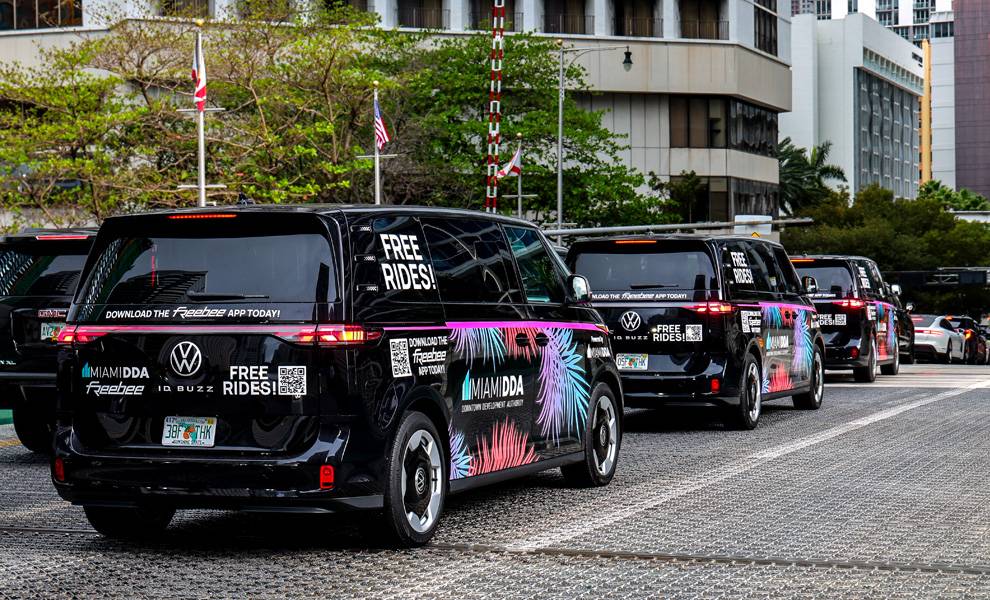
A new fleet of electric vehicles by Freebee recently launched to help residents, workers, and visitors move more easily throughout Miami’s busiest districts
Miami’s urban core continued evolving this week as local leaders introduced an expanded electric vehicle fleet designed to improve mobility and connectivity throughout the region. The initiative, led by the Miami Downtown Development Authority in partnership with Freebee, added six new on-demand electric vehicles to help people travel more efficiently between key business, cultural, and waterfront destinations. For a rapidly growing region like Miami-Dade County—where transportation, public infrastructure, and accessibility remain central to South Florida regional governance—the program reflects broader efforts to modernize urban mobility while supporting economic activity and community awareness.
Expanding access through electric microtransit
Officials from the Miami Downtown Development Authority unveiled the new vehicles during a public launch event attended by local government leaders and program partners. The expansion built on the success of the earlier Freebee pilot program, which previously transported more than 40,000 riders throughout the area.
The additional vehicles were designed to strengthen connections between major employment centers, dining destinations, cultural institutions, and waterfront attractions. Riders can request trips through an on-demand system, creating a convenient option for short urban travel without relying on personal vehicles.
Because the Freebee fleet operates using fully electric vehicles, the initiative also supports environmental sustainability goals increasingly prioritized across Miami-Dade County policy discussions. Programs like these help reduce traffic congestion while encouraging alternative transportation choices that align with South Florida’s long-term mobility strategies.
Strengthening regional connectivity and economic activity
Leaders involved in the program said the expanded service aims to close transportation gaps within the region’s most active commercial corridors. By offering quick connections between offices, hospitality venues, cultural destinations, and public spaces, the service helps improve accessibility for workers, residents, and visitors alike.
For businesses operating in the urban core, improved mobility can also translate into stronger foot traffic and greater economic activity. Accessible transportation systems play a critical role in supporting the broader South Florida economy while enhancing quality of life for people who rely on efficient ways to move throughout the area.
Programs like the Freebee expansion illustrate how public-private partnerships can help cities experiment with flexible transit solutions that complement larger public transportation systems.
As Miami-Dade County continues investing in infrastructure, mobility initiatives like this one highlight how innovation, sustainability, and regional collaboration can shape the future of transportation across South Florida.
For continued reporting on Miami-Dade County policy, transportation trends, and community developments across South Florida, readers are encouraged to subscribe to the Calle Ocho News newsletter. Local businesses and organizations interested in reaching the region’s diverse audience can also contact Pressnet Corp. to explore advertising and partnership opportunities with Calle Ocho News.


Add Comment