
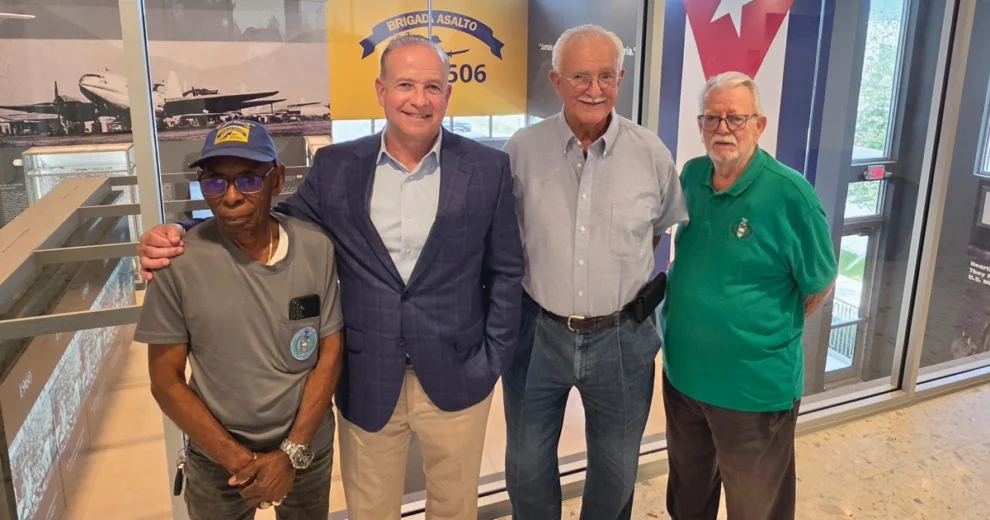
The experiences of veteran Eduardo Zayas-Bazán and the leadership of museum president Carlos Luis lasting historical legacy
Eduardo Zayas-Bazán remembers the moment he realized that the military support he expected would not arrive. As one of the first frogmen from Brigade 2506 to land at Playa Girón during the Bay of Pigs invasion, he had been trained to enter the water ahead of the main force, inspect the shoreline, and help determine where the landing vessels could safely approach.
American ships and aircraft were positioned nearby. According to Zayas-Bazán, American pilots wanted to assist the brigade but had received strict orders not to intervene. The Cuban exile force was left without the air support it believed was essential to the mission.
For Zayas-Bazán, the experience felt like a betrayal.
The United States had financed, armed, and trained the brigade. Zayas-Bazán had attended a military academy in the United States, as had his father, and his family had long held a favorable view of the country. He explained that the brigade members entered the operation believing they could lose their lives, but they did not believe the mission itself would be abandoned.
More than six decades later, however, he does not tell the story from a place of resentment. His life became an example of how disappointment can be transformed into purpose. After combat, injury, imprisonment, and exile, he rebuilt his life in the same country whose decisions had once caused him such pain.
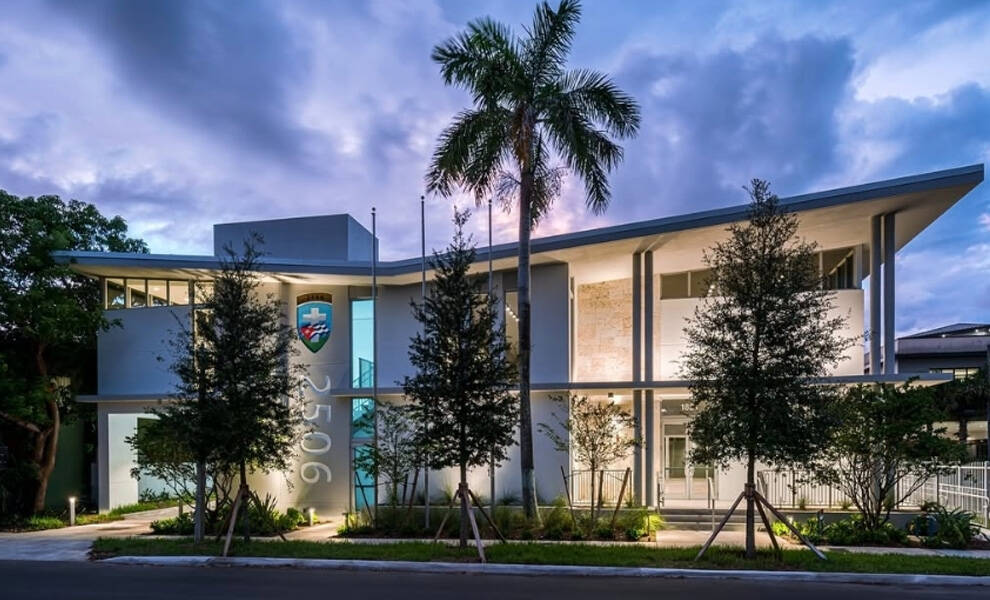
That journey is now among the stories preserved at the Bay of Pigs Museum and Library, located at 1821 SW 9th Street in Miami. The museum is open Monday through Friday from 10 a.m. to 4 p.m., Saturdays from 10 a.m. to 2 p.m. and closed on Sundays. Its official mission includes defending democracy, justice, individual liberty, and respect for human rights.
Eduardo Zayas-Bazán Transformed Disappointment Into Education and Service
The Bay of Pigs mission was intended to remove Fidel Castro’s government shortly after it took power. Brigade 2506 was expected to land in Cuba, hold territory for at least 72 hours, and establish the conditions for a provisional civilian government to request international recognition and assistance.
That plan depended on controlling the air.
According to Zayas-Bazán, the cancellation of air operations allowed Castro’s remaining aircraft to attack the brigade’s ships and destroy supplies. Without control of the air and with ammunition running low, the brigade fought for less than three days before the operation collapsed.
Zayas-Bazán was wounded below the knee and became one of the first brigade members captured. He was later sentenced to 30 years in prison or payment of a ransom. Because he required medical care, he was released with a group of wounded prisoners and returned to the United States before most of the other captured brigadistas.
The United States later helped negotiate the release of the remaining prisoners through an agreement involving food and medicine. Zayas-Bazán viewed that effort as an important act of responsibility and redemption. When asked whether he continued to resent the United States, his answer was clear: he did not.
He remembered that after being sentenced to decades in prison, he was reunited with his wife and young son in Miami within approximately one year. Rather than allowing the betrayal to define the remainder of his life, he recognized the opportunity he had been given to begin again.
His second life required humility and work. Before the invasion, he had earned $35 a week working in an apartment building and supplemented his income by washing residents’ cars. After his release, he received a scholarship and moved with his wife and children to Kansas to prepare for a career as a Spanish teacher.
He later earned a master’s degree and became a university professor, dedicating more than three decades to education. The former combatant and political prisoner became a teacher, husband, father, and contributor to American society.
His story does not erase the decisions that contributed to the brigade’s defeat. Instead, it shows that people can acknowledge betrayal without remaining imprisoned by it. Zayas-Bazán turned military defeat into education, imprisonment into service, and exile into a new life.
His message to younger generations is also direct. Freedom cannot be taken for granted. In his view, political indifference allowed authoritarianism to grow in Cuba. He believes citizens must understand their history, participate in civic life, and remain engaged in protecting their liberties.
Carlos Luis Built a Museum to Keep the Veterans’ Voices Alive
Carlos Luis, president of the Bay of Pigs Museum, represents the generation responsible for carrying this history forward.
The museum project required more than constructing a building. The original property had served for decades as a meeting place where veterans stored photographs, documents, uniforms, and personal memorabilia. Creating a permanent museum required acquiring neighboring property, securing zoning approvals, obtaining public and private support, and building a team capable of completing a project that had previously been attempted several times.
Luis recalled being warned that earlier efforts had failed because there were many ideas but not enough execution. He made a commitment that the same outcome would not happen again. Through the combined work of veterans, descendants, community leaders, public officials, attorneys, donors, and other supporters, construction began in June 2024. The building itself was completed in approximately ten and a half months, followed by the installation of the exhibits.
The expanded museum officially opened in April 2026 as a new educational and cultural resource for Miami-Dade County. Calle Ocho News previously reported on the opening of the Bay of Pigs Brigade 2506 Museum and the institution’s goal of connecting personal history with public education.
Luis explains the museum’s purpose through three central responsibilities: preserve and honor, educate, and inspire.
Preservation begins with the veterans themselves. The museum has recorded approximately 300 veteran interviews so visitors can hear participants explain what happened in their own words. The exhibits combine artifacts with first-person testimony, allowing history to be communicated through the voices of those who experienced the invasion, imprisonment, and exile.
Veterans also lead some museum tours, giving visitors an opportunity to ask questions directly. Luis believes this personal access makes the institution different from a traditional museum where history is presented only through objects and written descriptions.
Education is equally important because time is limited. Many veterans have died, and those who remain are now elderly. Their stories must be preserved before the opportunity to record them disappears.
Luis wants younger generations to understand that freedom carries a cost. Brigade 2506 included approximately 1,400 men, some of them very young. They left behind families, careers, education, and personal ambitions because they believed they had a responsibility to help free their homeland. More than 100 men died during the mission, while many survivors endured imprisonment and separation from their families.
The museum also reflects the experience of a community that faced more than one betrayal. Many Cuban families felt betrayed first by the promises of the Castro revolution and later by the withdrawal of expected American support during the invasion. Yet the story that followed was not limited to defeat. Brigade members returned to exile, established businesses, pursued education, raised families, and contributed to the growth of South Florida.
Calle Ocho News previously explored Luis’s perspective in its article about the Bay of Pigs Museum and the victims of communism. Readers can also explore the publication’s broader Miami History coverage for stories about the people and events that shaped the region.
The museum therefore preserves more than the history of a failed military operation. It documents what people did after the failure. It shows how veterans responded to loss, how families built new lives, and how descendants such as Carlos Luis accepted responsibility for protecting their legacy.
Zayas-Bazán’s life provides the human center of that message. He experienced betrayal without choosing permanent bitterness. He accepted the opportunity to rebuild and used that opportunity to educate others. His story demonstrates that painful events can become sources of wisdom, discipline, and service without being forgotten or excused.
The Bay of Pigs Museum and Library is located at 1821 SW 9th Street, Miami, Florida 33135. It is open Monday through Friday from 10 a.m. to 4 p.m., Saturdays from 10 a.m. to 2 p.m. and closed on Sundays. Additional information and museum tours are available through the official Brigade 2506 website.
As the number of living veterans continues to decline, preserving their voices becomes increasingly urgent. Through the testimony of Eduardo Zayas-Bazán and the leadership of Carlos Luis, the museum connects personal memory with public history and ensures that future generations can learn not only about sacrifice and betrayal, but also about forgiveness, resilience, and the responsibility to protect freedom. Subscribe to Calle Ocho News for weekly Miami-Dade updates, and contact Pressnet Corp. for advertising, sponsorship, and partnership opportunities.