
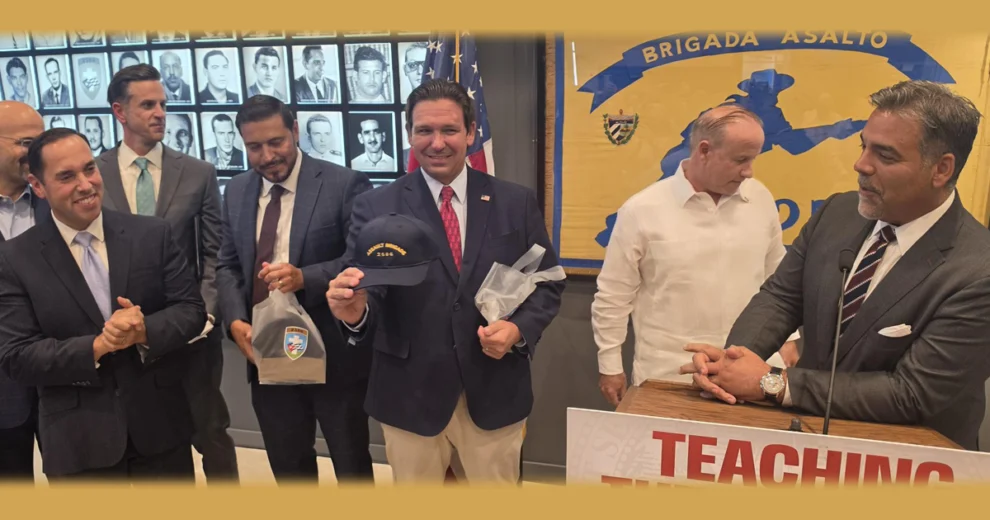
Florida students will encounter expanded instruction on communism beginning this school year, with state leaders highlighting the new standards at Miami’s Bay of Pigs Museum
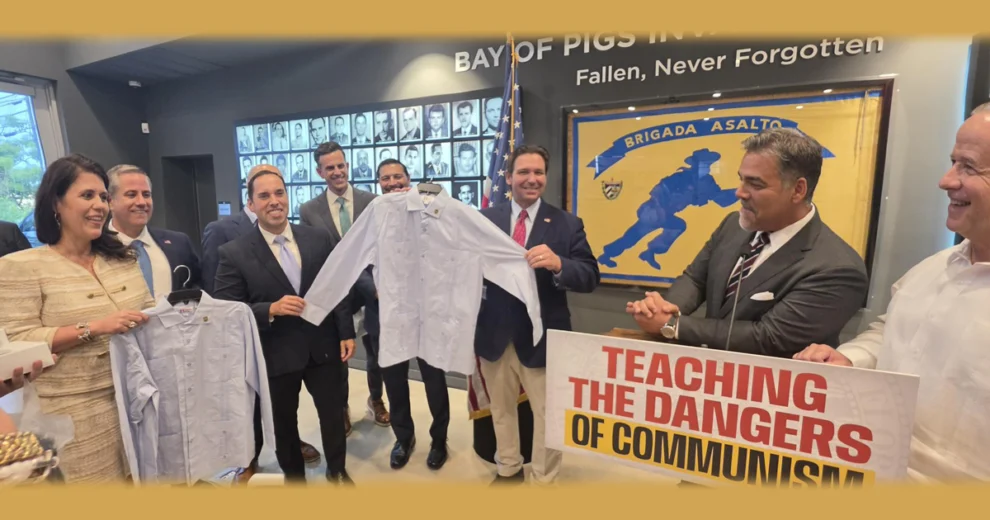
Florida’s newly implemented history of communism standards are bringing a politically and culturally significant subject into classrooms across the state, with Gov. Ron DeSantis marking their implementation during a September 10 appearance at the Bay of Pigs Museum in Miami.
The standards stem from legislation approved in 2024 and standards adopted by the State Board of Education in November 2025. They are being implemented during the 2026-2027 school year and expand required instruction on the history, ideology and effects of communism. Florida Department of Education guidance says the material is incorporated into social studies instruction beginning in sixth grade.
For Miami-Dade, the subject has particular resonance. South Florida is home to generations of Cuban exiles as well as residents whose families left countries including Venezuela and Nicaragua amid political repression and economic upheaval. Holding the event at the Bay of Pigs Museum placed the statewide education initiative within a community where debates over communism are connected not only to textbooks and politics, but also to family histories, migration and exile.
New Standards Expand What Florida Students Learn About Communism
The legislation behind the new requirements, Senate Bill 1264, was primarily sponsored in the Florida Senate by Jay Collins, who is now lieutenant governor. Senators Ana Maria Rodriguez, Gayle Harrell and Bryan Avila were co-introducers. The measure passed the Senate 25-7 and the House 106-7 before becoming law in 2024.
The law requires age- and developmentally appropriate public-school instruction on the history of communism beginning in the 2026-2027 school year. It directed the Florida Department of Education to develop standards for that instruction, which the State Board of Education subsequently approved in November 2025.
The resulting curriculum is considerably broader than a single lesson. Florida's required-instruction guidance calls for teaching the history, ideology and domestic and international effects of communism, including movements, revolutions, policies and major events. Students are also expected to examine communism in comparison with democratic principles and study its historical tactics and consequences.
The detailed high-school standards cover subjects ranging from China and the Soviet Union to communist movements and anti-communist movements around the world. The standards also address Cuba and other experiences particularly relevant to South Florida's immigrant and exile communities.
At the Miami event, DeSantis described the initiative as an effort to provide students with a fuller understanding of the historical consequences of communist governments. His administration says the curriculum is intended to examine political repression, forced migration, famine and restrictions on individual freedoms associated with communist regimes.
The new standards build on a 2022 Florida law establishing Victims of Communism Day and requiring at least 45 minutes of related public-school instruction. SB 1264 substantially expanded that framework two years later.
Miami Institutions Connect Classroom History with Lived Experience
The law reaches beyond K-12 classrooms. SB 1264 created the Institute for Freedom in the Americas at Miami Dade College, with a mission that includes educational programs and partnerships related to democracy, economic freedom and governance in the Americas. It also renamed Florida International University's Adam Smith Center for the Study of Economic Freedom as the Adam Smith Center for Economic Freedom and directed the state to study the creation of a museum focused on the history of communism.
Those provisions give Miami-Dade an unusually direct connection to the legislation.
Bryan Avila, who co-introduced SB 1264 while serving in the Florida Senate and is now a candidate for lieutenant governor, joined DeSantis at the Bay of Pigs Museum event. Avila described the legislation as “monumental” and said it would educate future generations about communism, while connecting the issue to the experiences of exile families such as his own. His remarks also included partisan criticism of political opponents and socialist policies.
For Miami's Cuban-American community, the choice of the Bay of Pigs Museum as the setting carried additional historical significance. The museum preserves the history of Brigade 2506 and the 1961 Bay of Pigs invasion, and its expanded facility opened earlier this year with a mission centered on preserving veterans' experiences and educating future generations. Calle Ocho News has previously reported on the museum's expansion and its role in keeping those firsthand accounts accessible as the veteran generation ages.
The state's approach is also part of a continuing public debate over how schools teach politically charged history. Supporters of the standards argue that students need more detailed instruction about repression and human-rights abuses under communist governments. The standards themselves establish specific required topics and examples, making their implementation in classrooms an issue that educators, parents and students will now encounter directly.
In Miami-Dade, that classroom discussion intersects with a history that remains deeply personal. Stories of political imprisonment, migration, family separation and rebuilding lives in South Florida are still carried by residents who experienced those events or heard them firsthand from parents and grandparents. As the standards move from legislation into actual instruction, the next test will be how schools translate a broad and politically debated historical subject into classroom teaching for students across Florida. Subscribe to Calle Ocho News for weekly Miami-Dade updates. Contact Pressnet Corp. for advertising, sponsorship and partnership opportunities.