
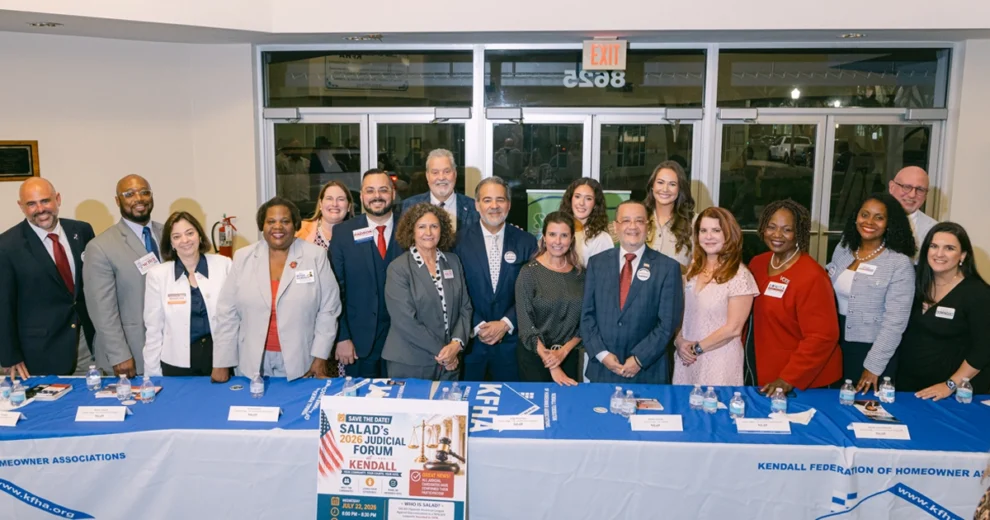
A full slate of confirmed judicial candidates joined residents and civic leaders for a nonpartisan forum focused on qualifications, courtroom experience and informed voting
Judicial races can receive less public attention than higher-profile contests, even though judges make decisions that affect families, businesses and communities throughout Miami-Dade County. The SALAD 2026 Judicial Forum, held July 22 at the Kendall Village Center Civic Pavilion, sought to narrow that information gap by bringing all 14 confirmed participating judicial candidates directly before voters for an evening centered on civic education.
The Spanish American League Against Discrimination (SALAD) organized the event in partnership with host organization the Kendall Federation of Homeowners Associations (KFHA) under the theme “Your Community. Your Courts. Your Vote.” Residents, business owners, community organizations and media representatives attended the forum, reflecting broader interest in understanding the candidates seeking judicial office ahead of the 2026 election.
The timing is significant. Miami-Dade's August 18 Primary Election ballot includes nonpartisan contests for Circuit Judge in Florida's 11th Judicial Circuit and County Court Judge. The county's official master ballot allows voters to review the candidates and contests before voting.
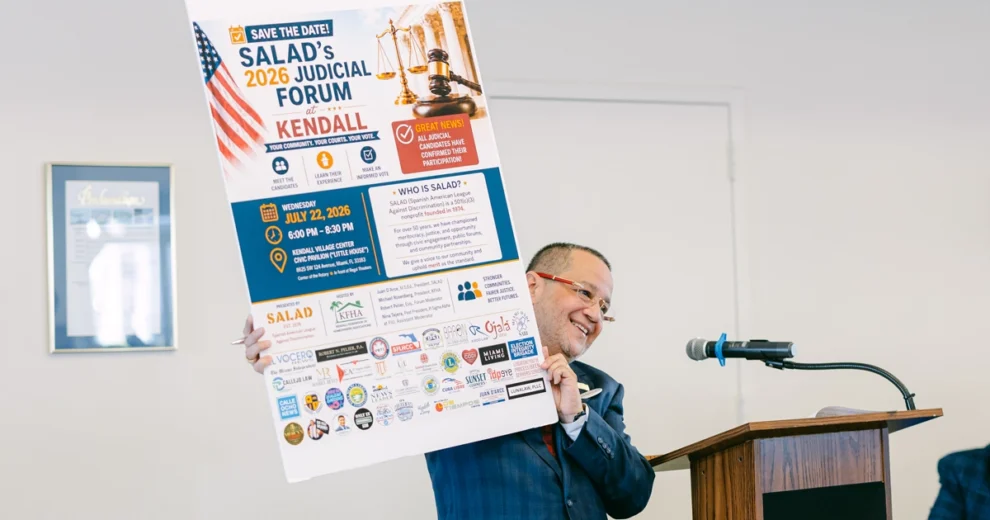
SALAD 2026 Judicial Forum Puts Civic Education at the Center
SALAD President Juan D'Arce, M.S.Ed., welcomed attendees and introduced Lissette Monzon, director of KFHA, representing KFHA President Michael Rosenberg. Seven-year-old Juan D'Arce III led the audience in the Pledge of Allegiance.
Moderator Robert Pelier, Esq., and assistant moderator Nina Tejera, a past president of Pi Sigma Alpha at Florida International University, then guided candidates through timed questions addressing qualifications, courtroom experience and judicial philosophy.
The format reflected the forum's stated nonpartisan purpose: giving residents an opportunity to hear directly from candidates rather than relying primarily on name recognition when making decisions in judicial contests.
“Of the three branches of government, the judiciary is arguably the one we understand least — yet it touches our daily lives more directly than almost any other,” D'Arce said.
He connected the event to SALAD's history, tracing the organization's civic work to its founding in 1974 under first president Javier Bray and noting the later work of sixth president Osvaldo Soto, who advocated for an informed public as an important component of a merit-based judiciary.
That emphasis on voter education is particularly relevant during the current election cycle. Miami-Dade County has encouraged residents to prepare for the August 18 election by reviewing the official sample ballot, while early voting is scheduled for August 3 through August 16.
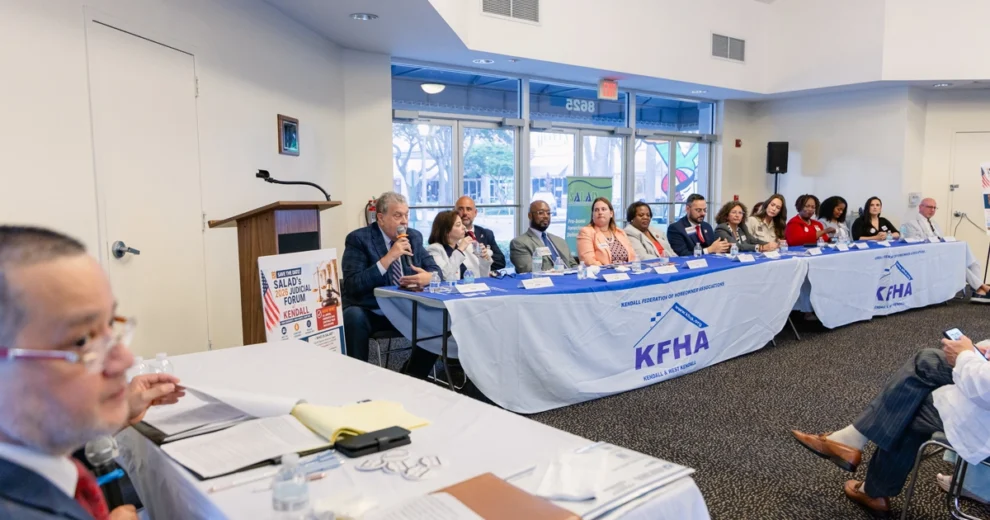
Judicial Elections Highlight the Importance of Informed Voting
Unlike many political contests, judicial elections require voters to assess candidates for positions intended to operate independently of partisan political pressures. That makes public understanding of professional qualifications, legal experience and the judicial role especially important.
The official August 18 ballot identifies judicial contests as nonpartisan, reinforcing the distinction between these races and the partisan offices appearing elsewhere on the ballot.
Forums such as SALAD's provide another source of information by allowing voters to hear candidates respond to the same structured questions in a public setting. The organization said its goal is to encourage voters to evaluate judicial candidates based on factors including merit, ethics and community engagement rather than familiarity with a candidate's name alone.
The participation of all 14 confirmed candidates was therefore an important element of the event. Rather than presenting only selected campaigns or perspectives, the forum gave participating candidates an opportunity to address the community within the same program and format.
The turnout also demonstrated how civic education can extend beyond candidates and election officials. Local businesses, civic organizations, community leaders and media outlets can all contribute to making election information more accessible, particularly in a county as large and culturally diverse as Miami-Dade.
For residents preparing to vote, forums are one part of a broader information-gathering process. Voters can also consult the official sample ballot, research candidates' professional backgrounds and use election information provided by the Miami-Dade County Supervisor of Elections. The county has made the official master sample ballot available so residents can study contests before casting their ballots.
SALAD summarized its civic education message with a straightforward principle: voting is a right, while informed voting carries an additional civic responsibility. As Miami-Dade moves closer to the August 18 election, the 2026 Judicial Forum underscores the role that accessible, nonpartisan public education can play in helping residents better understand the judicial branch and the people seeking to serve on the bench. Subscribe to Calle Ocho News for weekly Miami-Dade updates. Contact Pressnet Corp. for advertising, sponsorship, and partnership opportunities.